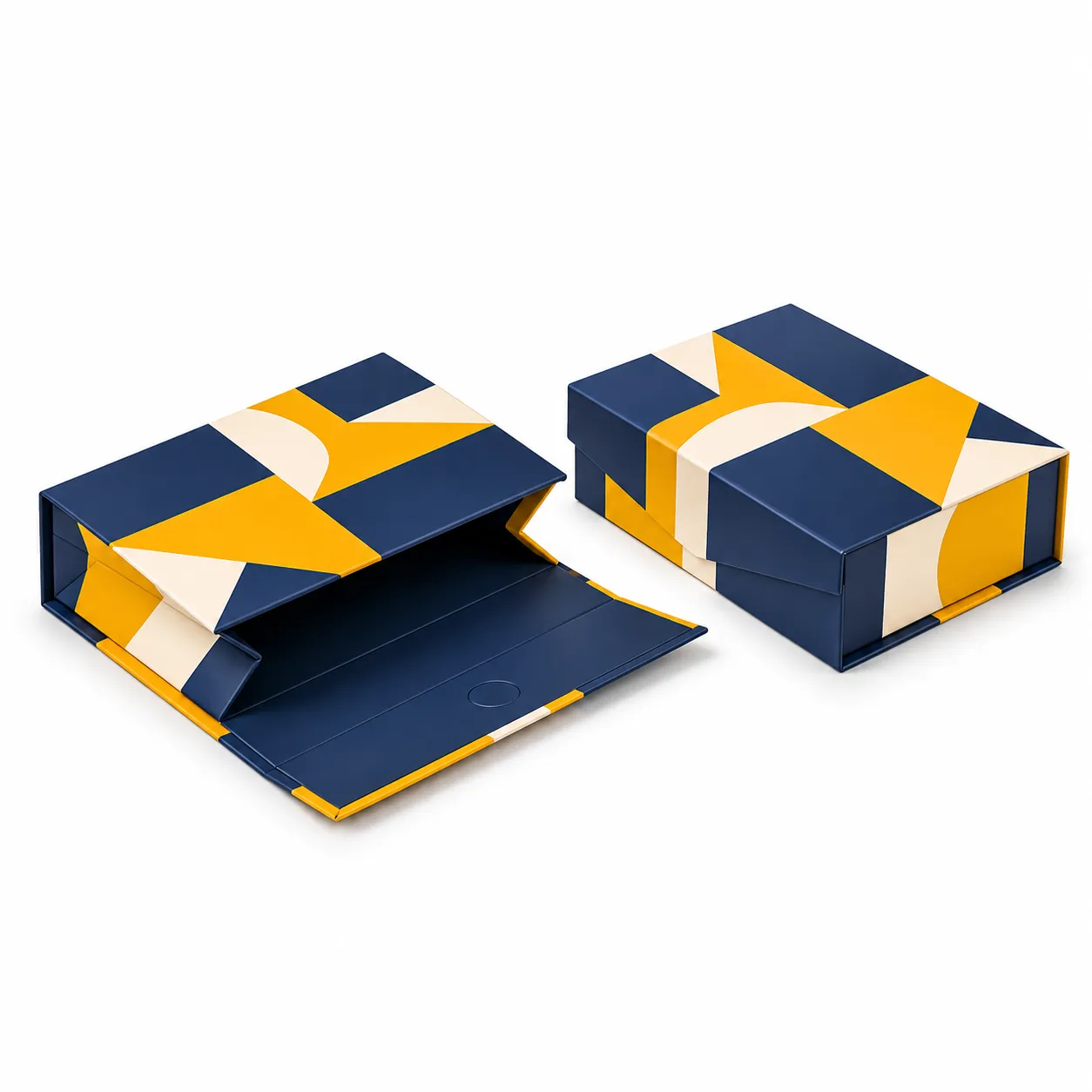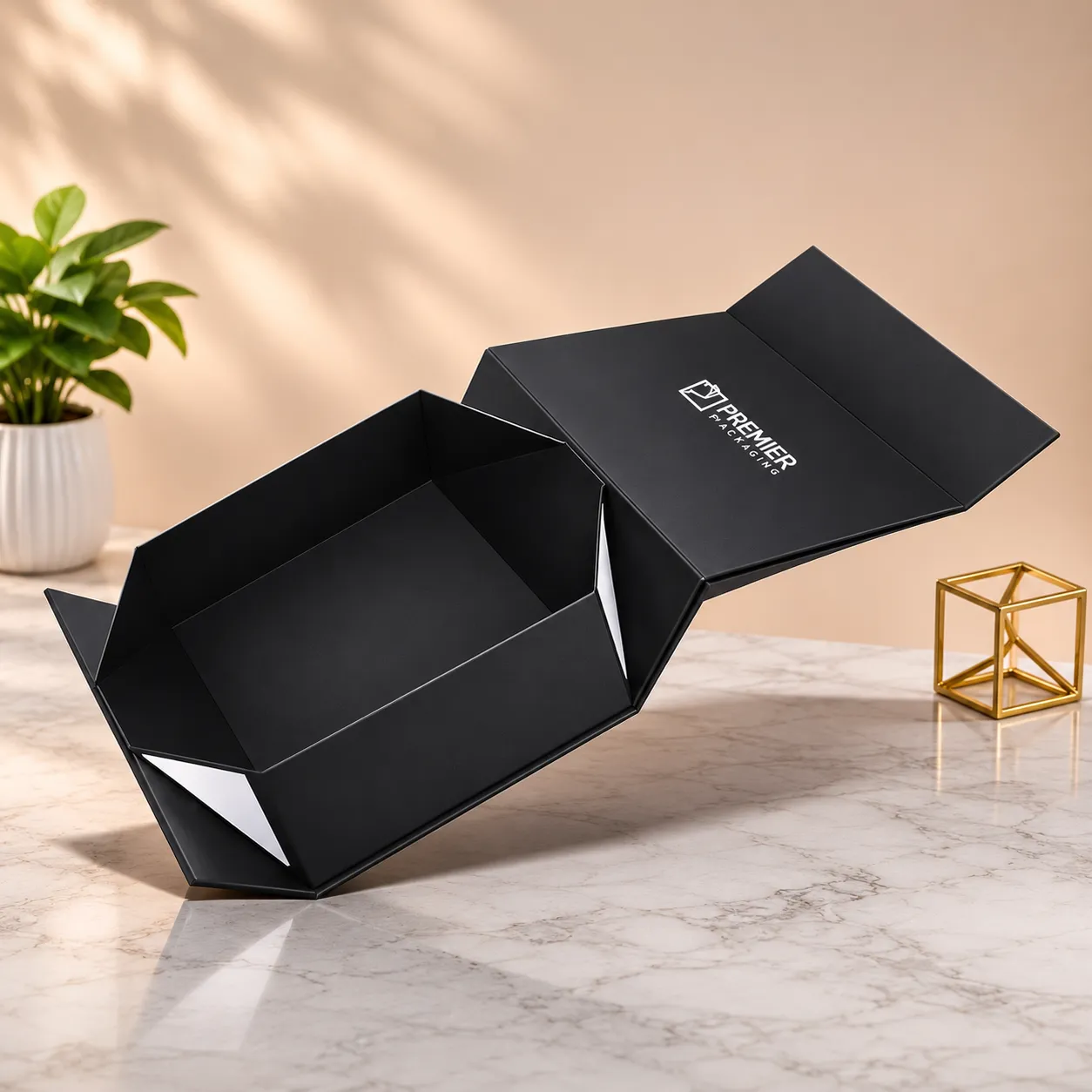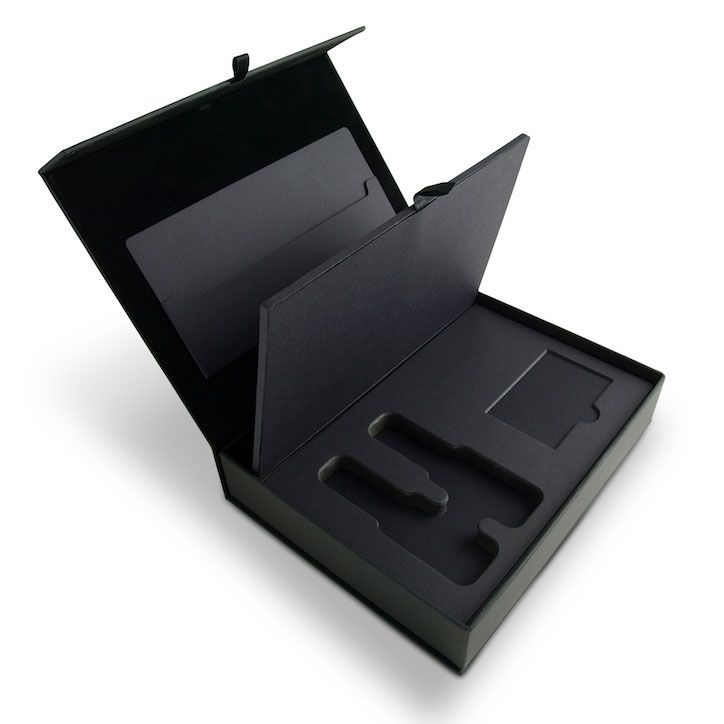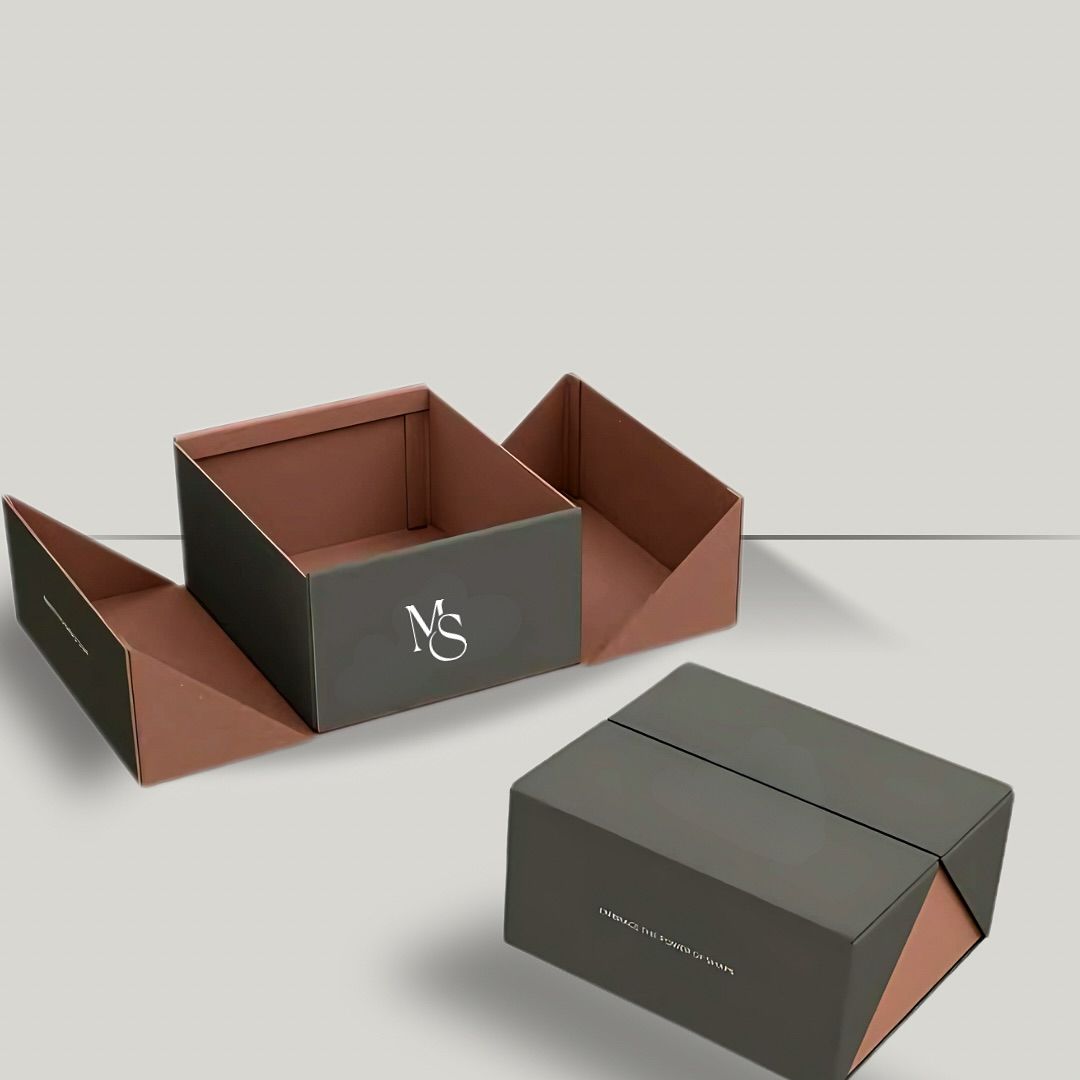


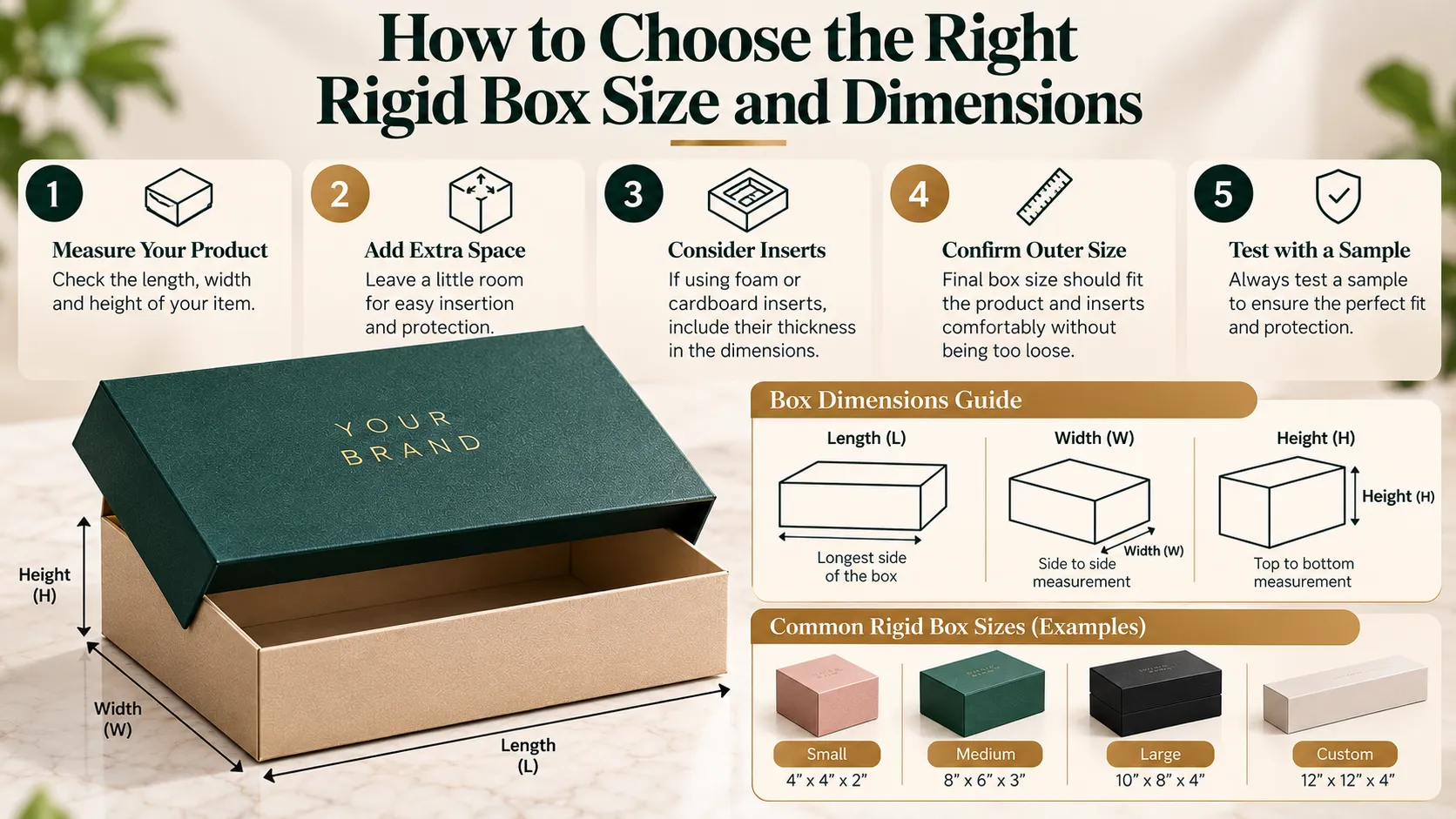









The process for determining the correct rigid box dimensions involves measuring the largest dimension of your product and adding space for an insert and clearance, then providing those measurements to your box supplier as the internal dimensions. The outside of your box will be larger than the inside because of the added thickness of the board walls.
Start by Measuring the Product
Measure your product in the exact manner in which it will be packaged. For example, if you ship a bottle with a pump attached, measure the bottle with the pump attached. If you offer a set, lay out your products in the manner in which you wish to display them.
Write down three measurements: length (longest side), width, and depth from bottom to top. Using either a ruler or digital calipers, measure to the nearest 1/16th of an inch or millimeter, and always round up. For step-by-step instructions, read our blog post on how to measure your product for a rigid box.
Internal vs. External Dimensions
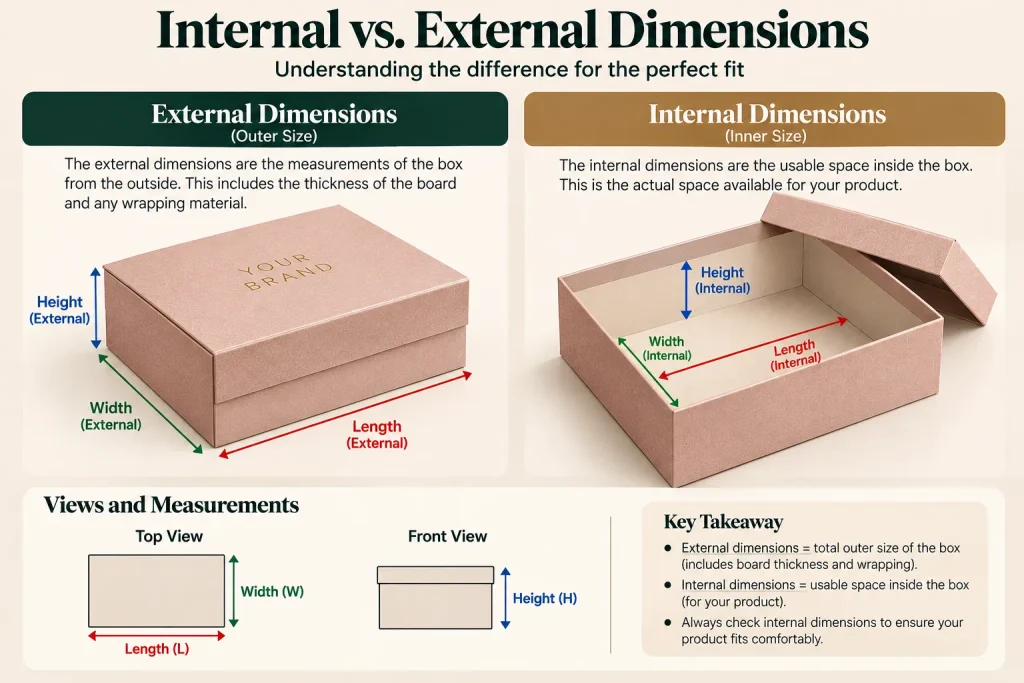
The most common errors occur in this step, since rigid boxes have two sets of dimensions that cannot be confused.
Internal dimensions refer to the usable space within the walls and floor. The product fit and insert design are determined by this measurement.
External dimensions relate to the external dimension of the complete box, which includes board, wrapping, and if there is a lid that extends beyond the base of the box. Shipping cartons and shelf space requirements depend on this figure.
Because the rigid board is thick, the difference between the two figures is significant. With 2 mm (approx. 0.08″) rigid board, 0.16″ is added to the length and width dimensions before we factor in the wrapping. In case of a two-piece box that uses a full depth lid, this thickness becomes an additional figure. More about our rigid box materials and thickness figures can be found here Rigid Box Materials Explained: Chipboard, Paper Wraps and Linings.
Always specify internal dimensions for your supplier and indicate them accurately. If you have the outer dimension in mind, then give the supplier the outer dimension, and they will calculate the inside one themselves.
Plan for Insert Clearance
The insertion clearance is the volume of the insert plus some additional space allowing the product to be inserted and taken out without any extra effort. Each type of insert requires its own calculation:
- Foam inserts require material around each hole; hence, the bigger block size, the deeper the box.
- Paperboard inserts are thin; however, folded walls and raised bases increase the height and width of the insert.
- Trays and dividers partition the interior space; therefore, each partition needs to accommodate the item itself and the divider wall as well.
Design the insert and the box together. In our blog article on rigid box inserts Materials, Types and Design, you can see how different they are.
Tolerance: Why “Exact” Is Never Exact
Every manufacturing process has tolerance, a small amount of permissible deviation between the required size and the final size. There could be slight variations from the cutting, wrapping, and gluing processes. Consult your manufacturer about the tolerance level they work with and the clearance they suggest for your product. This should be confirmed physically using a sample before the final production run. There will be less tolerance required in a tight fit than a product wrapped in tissue paper.
Product Examples With Sample Dimensions
These serve to exemplify the mathematics involved. They are not standardized dimensions, and your choice of insert and board will result in different dimensions.
| Product | Product Size (inches) | Possible Internal Size (inches) | Notes |
|---|---|---|---|
| 30 ml dropper bottle | 1.4 x 1.4 x 4.3 | 2.5 x 2.5 x 5 | About 0.5 inch of foam around and under |
| Candle in 3-inch glass jar | 3 x 3 x 3.5 | 3.5 x 3.5 x 4 | Die-cut paperboard insert |
| 50 ml perfume bottle | 2.4 x 1.4 x 4 | 3.25 x 2.25 x 4.5 | Foam or cardboard insert |
| Women’s size 8 flats | Varies by style | About 11 x 7 x 4 | Packed in tissue |
One bottle of serum typically requires a narrow, tall box, while a set of three requires a wider but not deeper box. This is how rigid serum boxes look like. Glass jars are weighty products, which is why rigid candle boxes often feature both thick board and insert to center the product. Fragrances are sold in unique bottles, which is why rigid perfume boxes need accurate measurements. Footwear requires much more space, particularly boots, so check our rigid shoe box sizes and structures.
How Box Style Affects Size
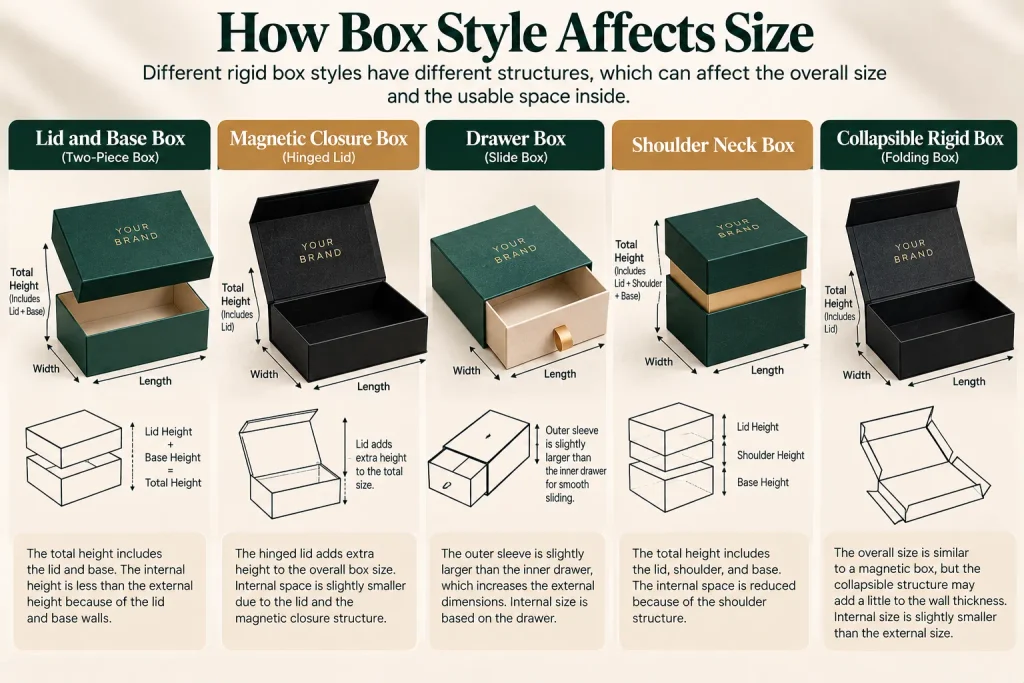
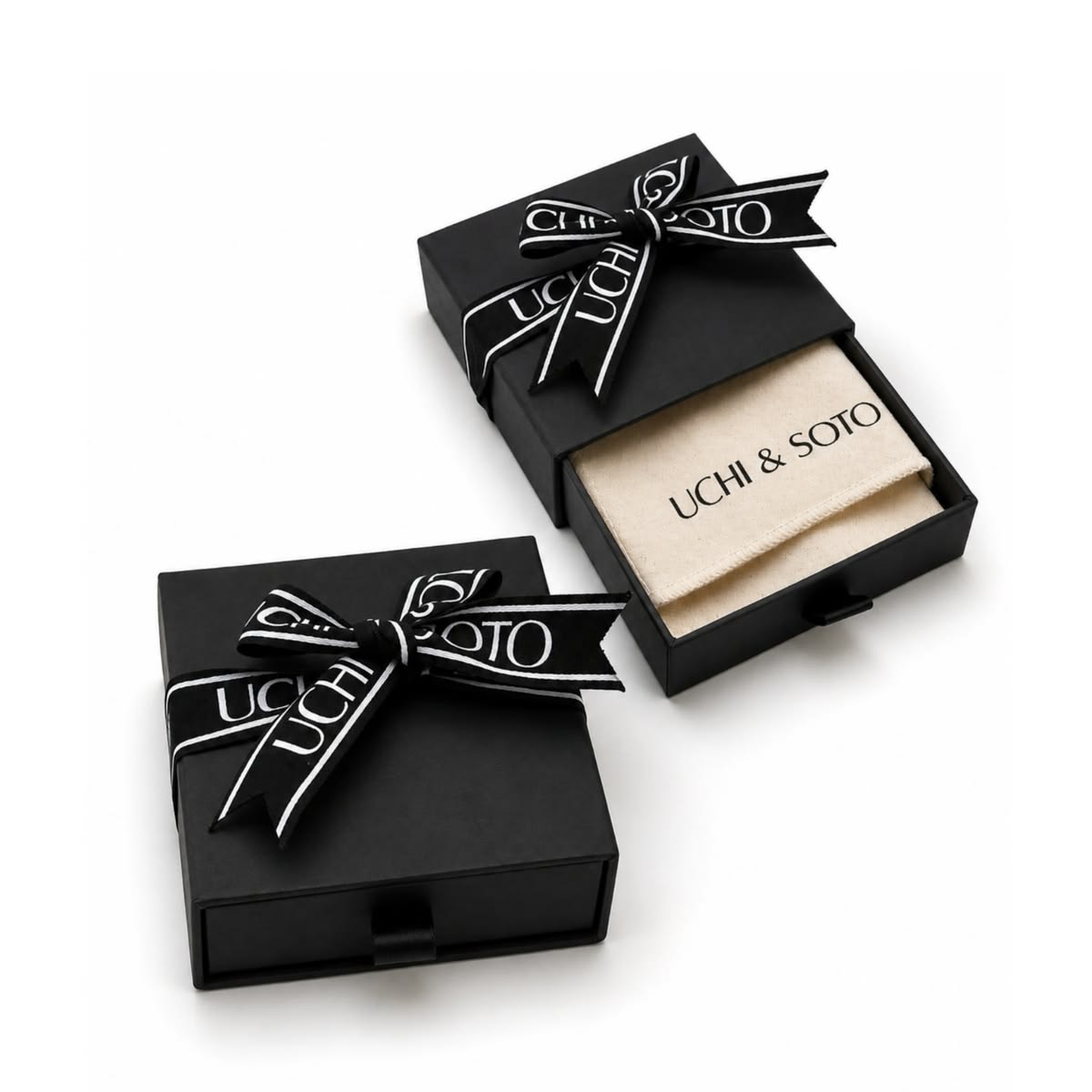
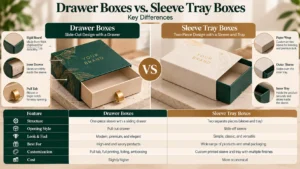
Structures determine how dimensions are calculated. In a lid-and-base structure, for example, the internal dimension of the lid should be slightly larger than the external dimension of the base. For a drawer box, a precise sliding relationship is needed between the sleeve and the tray. Rigid magnetic closure boxes feature a lid with a hinge attached to the base and increase the external dimension on the hinge side.
Size is also an aspect that determines the price of your box. Since the bigger the size of the box, the more materials and cost involved, any reduction in size like a quarter inch of empty space may be significant over a huge order. Check the elements that determine the price of rigid boxes.
Quote Checklist for Rigid Box Dimensions
Before the price estimate is done, provide us with:
- Product dimension (length x width x height – rounded off)
- The statement that whether your measurement is internal or external measurement
- The number of pieces per box along with their arrangement
- Insert description, if any
- Desired box design
- Weight of the product to determine the board
- Size restrictions, if any – such as for the shipping container
If you are not sure about the dimensions of a specific item, we can assist you determine custom rigid box dimensions.
Frequently Asked Questions
Should I give my supplier internal or external dimensions?
Provide internal dimensions where product fit is involved, and this usually applies all the time. These dimensions refer to the dimensions the product and insert will truly take up. Mark clearly that these are internal dimensions and provide any external size limitation you might have, like the shipping box.
How much bigger is the outside of a rigid box than the inside?
This varies on how thick the boards will be, whether there is wrapping or not, and the construction type. For example, for a 2 mm board, the length and width will take about 0.16 inch before the wrap or the overlaying lid.
Do I need to know my insert before choosing a box size?
Absolutely. The volume required for foam, paperboard, and tray insert varies, as well as how much volume a foam block takes. Designing both the box and tray insert at once will help prevent future resizes.
How do I confirm the fit before production?
Approval of proof or sample is one of the steps in our order process, so please let us know which one your order requires. In case of a sample, put your actual product inside the box, open and close it a few times to see if anything is rattling around or catching.
Get Your Rigid Box Sized Correctly
Accurate rigid box dimensions help hold your product securely, keep shipping costs in check, and make the box look made for what is inside. Request a quote with your measurements, and our team will follow up with sizing guidance and pricing.