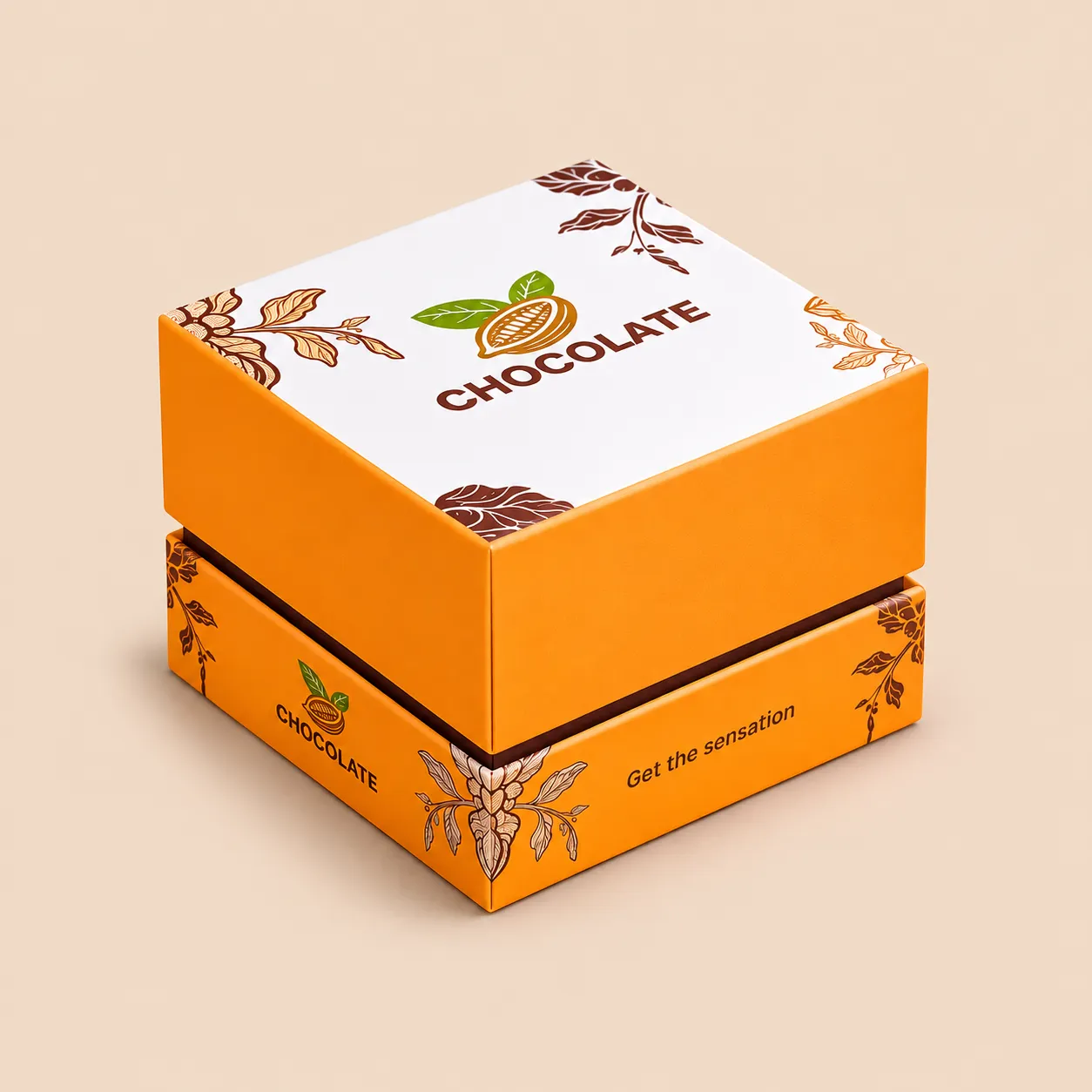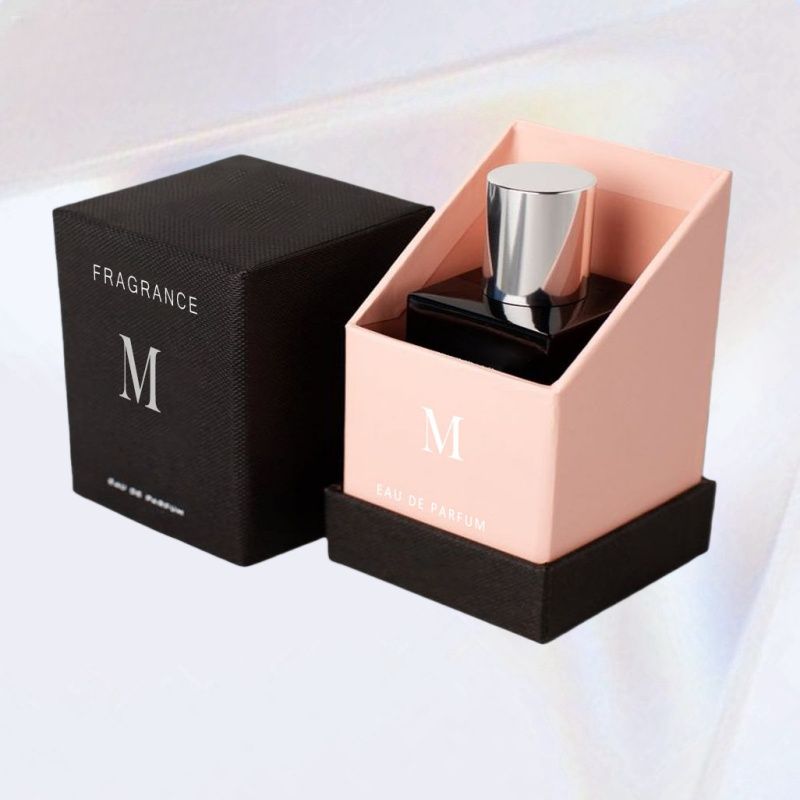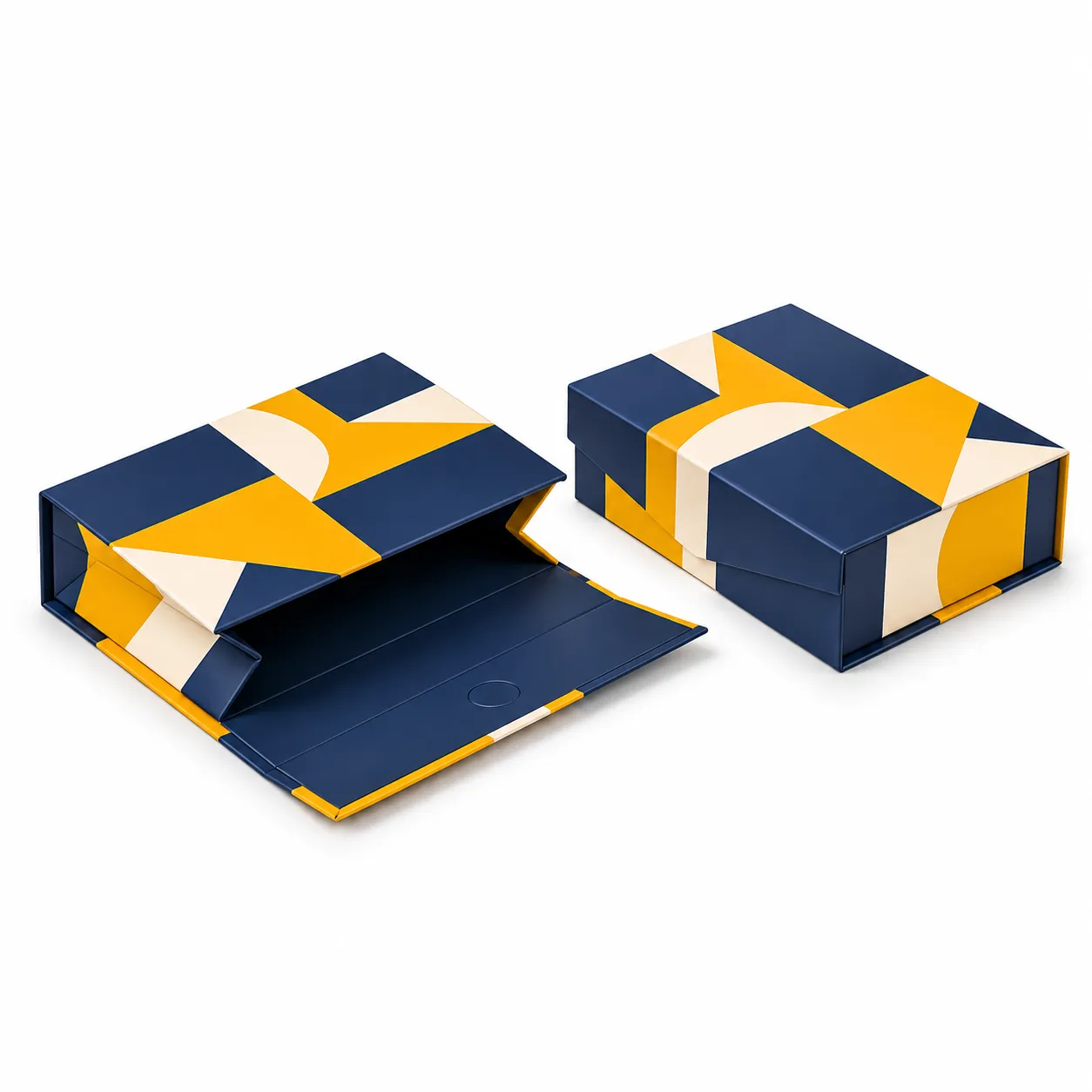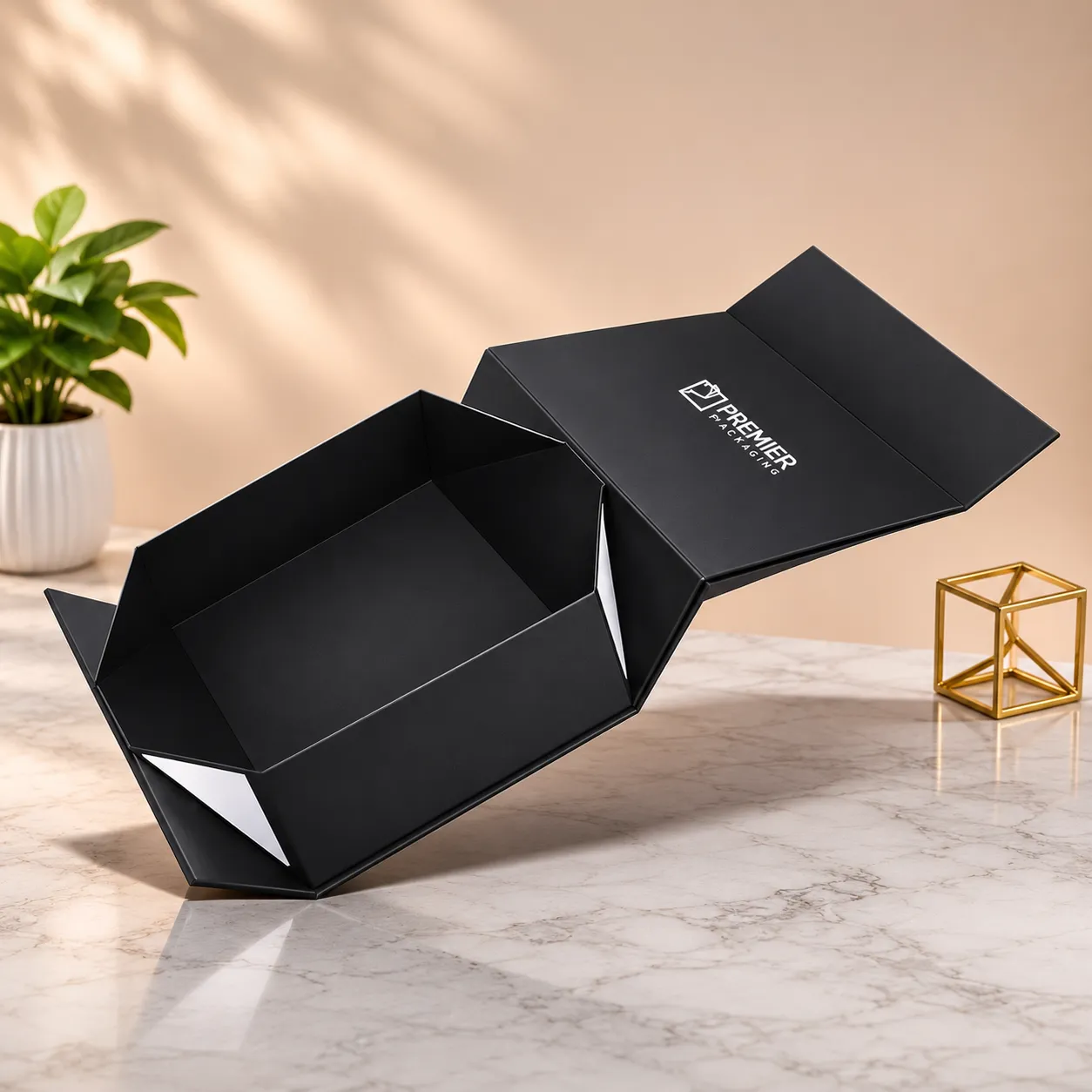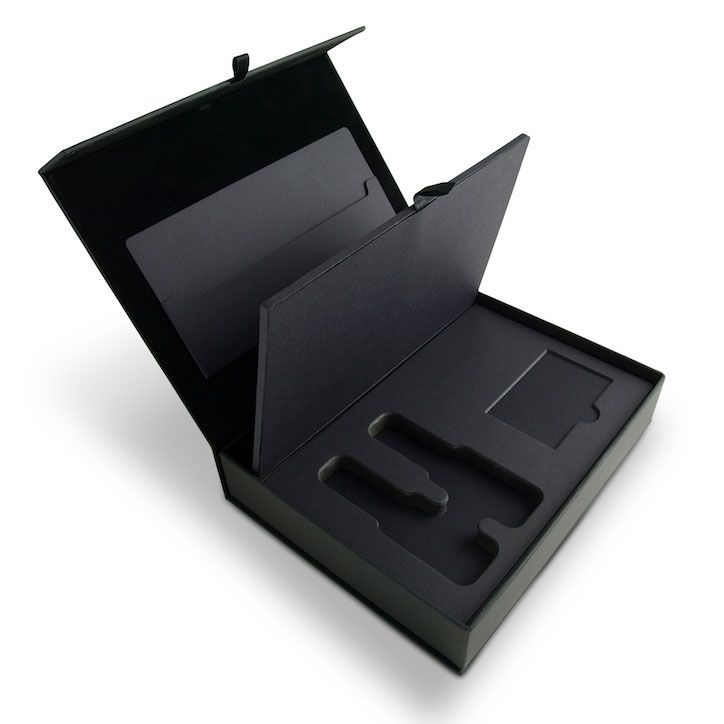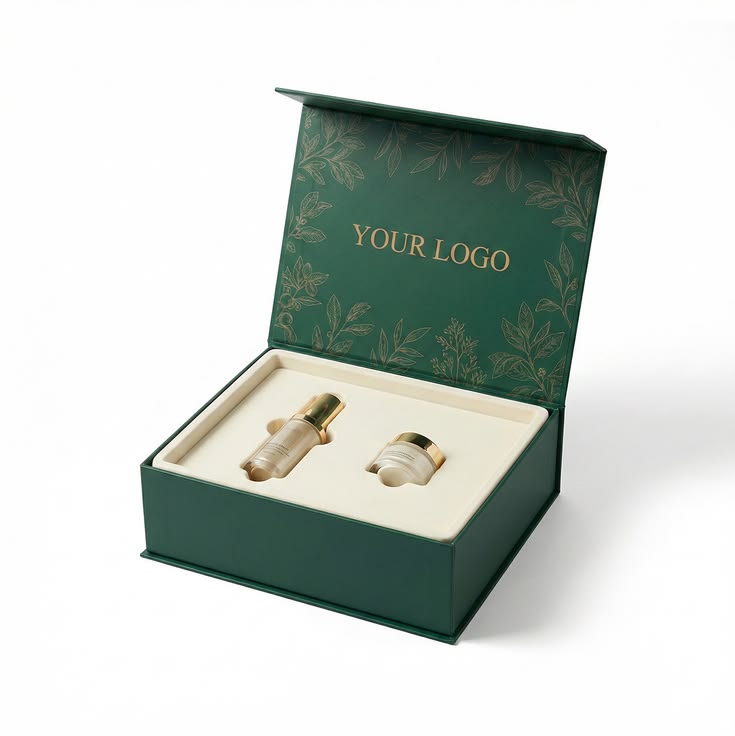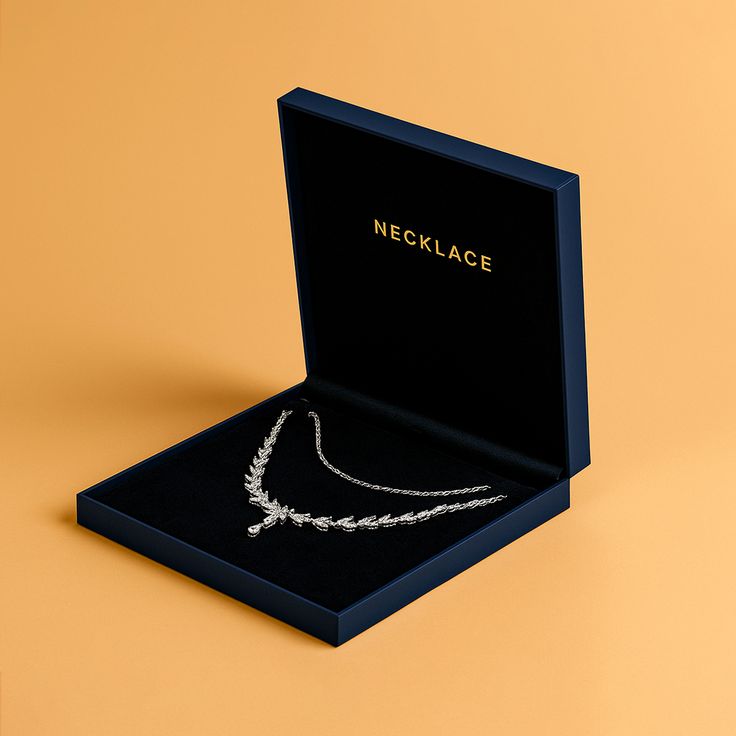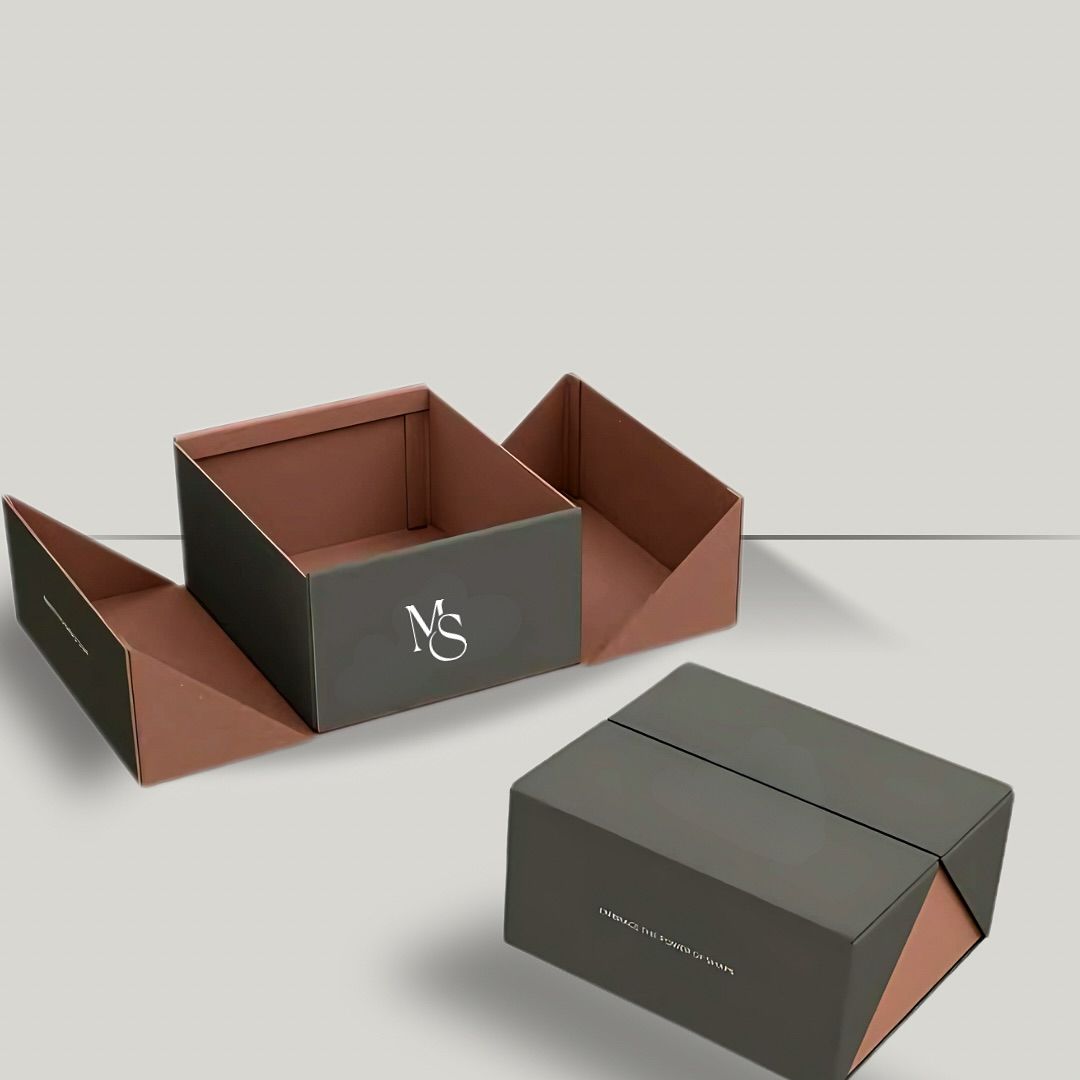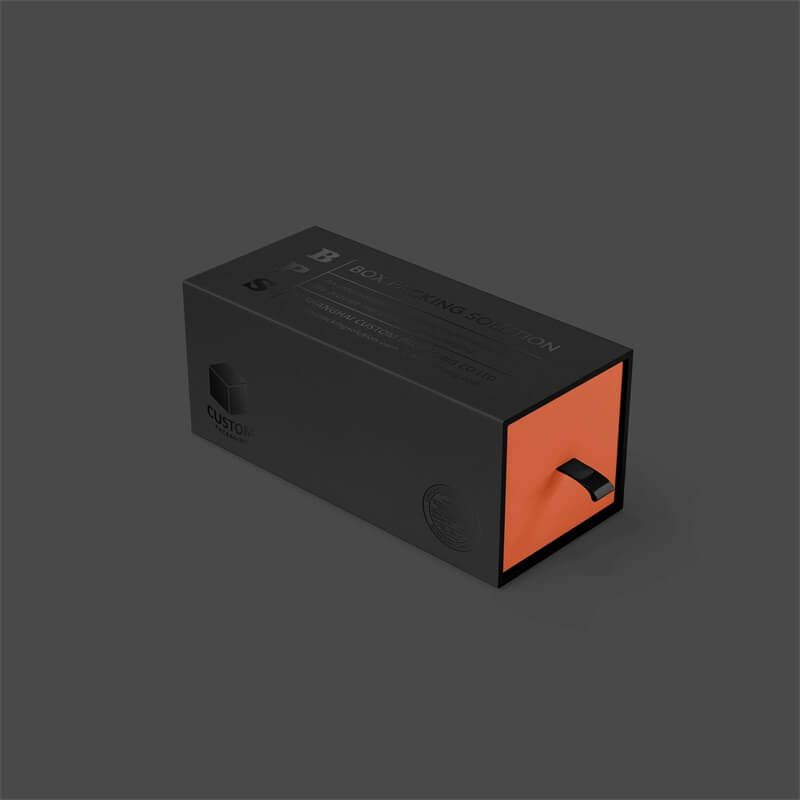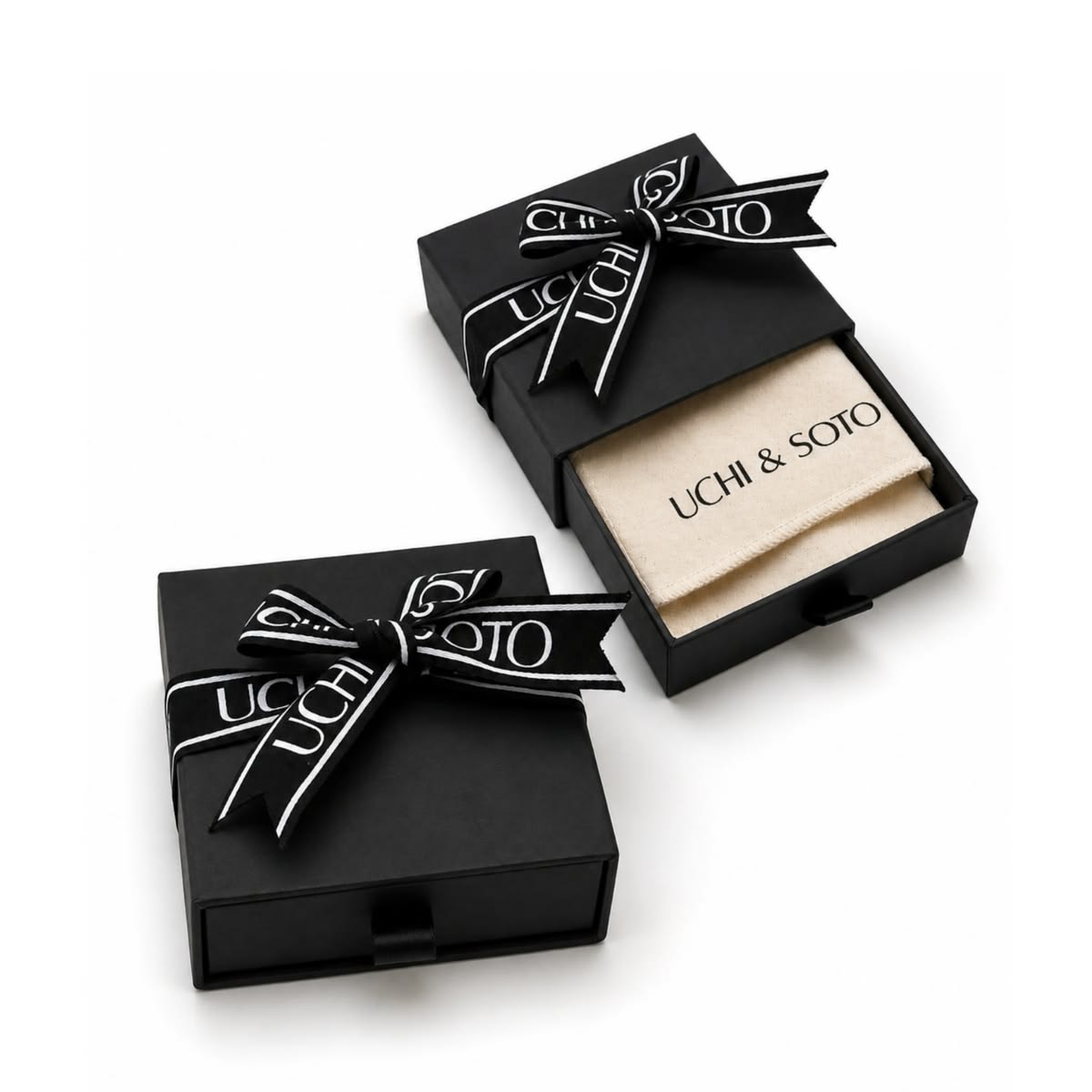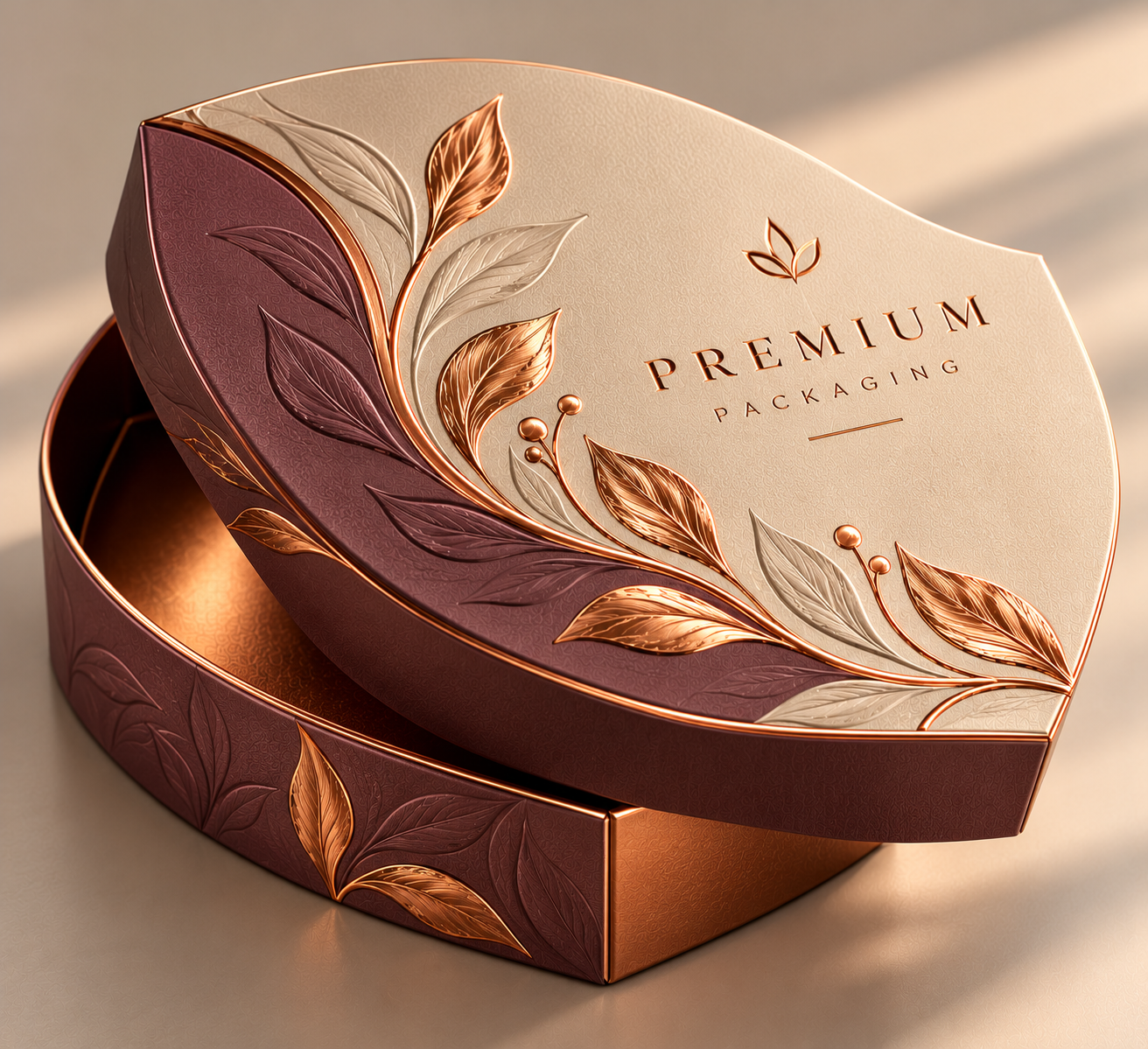


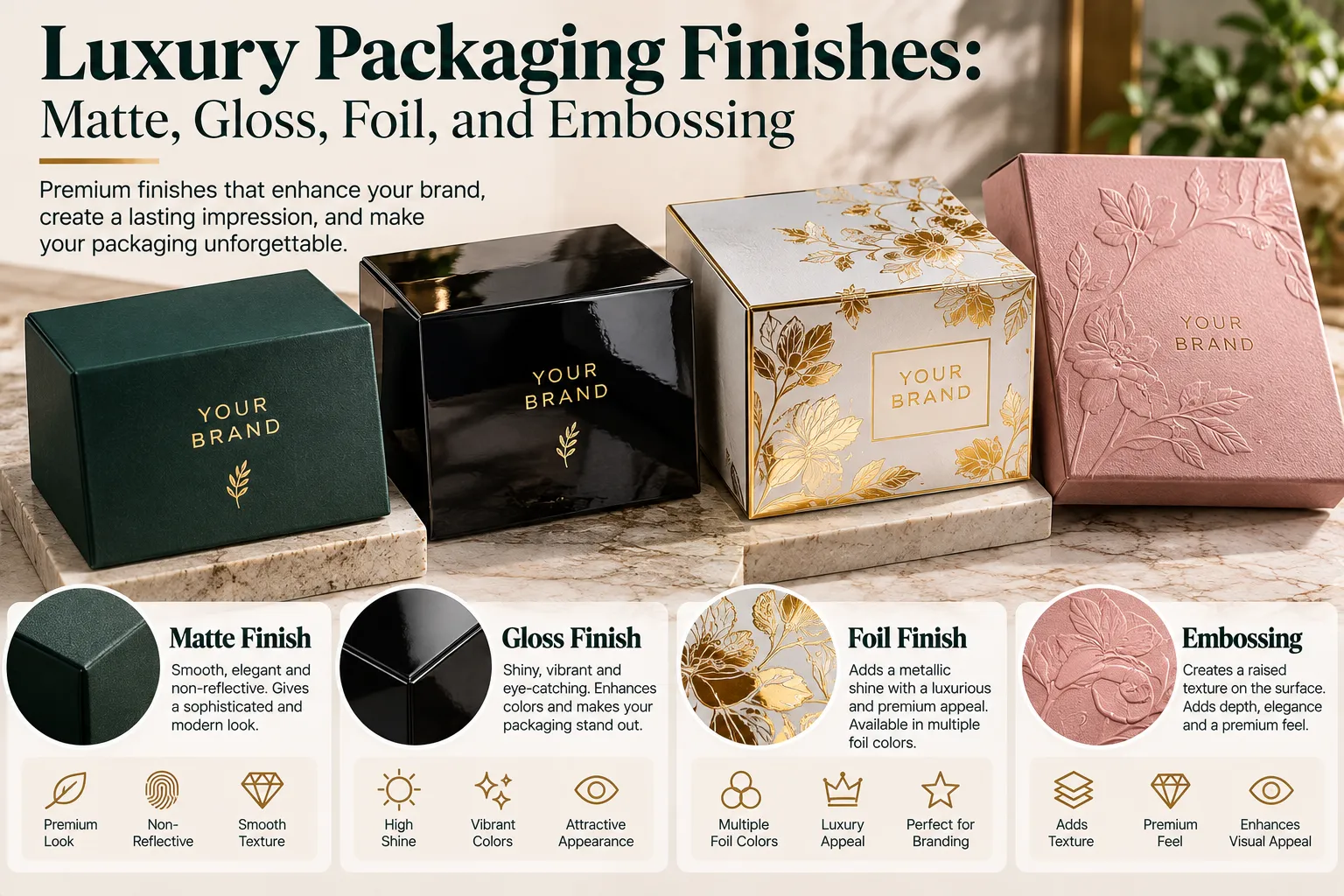





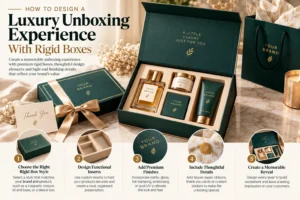

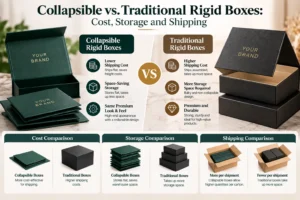
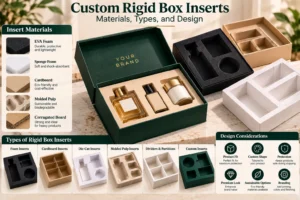
Luxury packaging finishes are the surface treatment you give to your box after the graphics are applied to it. Some of the commonly used finishes include matte, gloss, soft touch, as well as foil stamping, embossing, debossing, and spot UV. They affect how the box will look or feel when you handle it, and a luxury box will usually have a combination of finishes.
Types of Luxury Rigid Box Finishes: Matte, Gloss, and Soft-Touch
The base finish is applied to the entire surface of the printed wrap. Once you have decided which one you need, you can add your accents on top of it. The type of wrap is also important, because different papers react differently to finishing techniques. This is explained in our article about rigid box materials and paper wraps.
Matte
The matte finish, which is usually done through matte lamination, creates a surface that does not reflect much light. The box appears subtle since the colors appear soft and deep. Matte finishes make the use of foil accents and spot UV more effective because the foil catches light while the rest of the surface does not reflect light.
Gloss
Gloss finish reflects light and increases color brightness and saturation. It is appropriate for colorful images including photography such as candles on boxes with an image covering the entire box. Gloss finish will have a glare when there is strong lighting and it will be fingerprint sensitive in dark colors.
Soft-Touch
Soft-touch finish creates a matt looking surface with a soft velvet feel. One is able to notice immediately once one handles the packaging box. It is perfect for cosmetic, fragrance, and tech accessory packaging.
Accent Finishes: Foil, Embossing, Debossing, and Spot UV
Accents focus on certain parts, such as a logo, a design or a row of letters, drawing attention to them.
Foil Stamping
Foil stamping involves placing a metal film on top of the box surface using heat and pressure. Gold, rose gold, and silver foils are available. The foil stamping effect is most successful when applied to logos, brand names, borders, and short text lines. On the black matte lid, the gold foil logo provides good contrast and clear print.
Embossing
Embossing implies raising a portion of the surface to create a relief from a logo or pattern. It creates an additional tactile effect noticed by customers with their fingertips. Embossing may be done separately, which is called blind embossing, or together with foil.
Debossing
In debossing, the design is pressed into the material to make it lower than the rest of the box. This technique is subtle and works well for those who want a brand image that is not too loud but elegant and refined. Debossed logos on soft touch lids without any ink or foil printing are quite common nowadays.
Spot UV
Spot UV makes certain elements glossy by putting a special glossy varnish on them. This technique works great on matte or soft touch boxes, where the glossy spots will be visible when the box is tilted. Spot UV is used for highlighting logos, patterns, or product names.
Artwork Requirements for Each Finish
Directions for luxury packaging finishes should be clear in your files. Common directions that suppliers require include the following:
- Layers should be separate. Foil, Spot UV, Embossing, and Debossing should be on different layers or plates with distinct names to avoid confusion with the colors printed.
- Vector Artwork. Logos and texts used for foils or embossing should be in vector artwork form, not low resolution images.
- Minimum line weights and spacing. Very thin lines and very small text will fill up or get lost in the foiling process. It is always advisable to find out from your supplier about their minimums.
- Registration. Foil that is placed over an embossed element should match perfectly. Make sure that you leave some room for error in your design rather than using tight outlines.
Our design team checks and improves your art work for free, which can help you avoid problems when you move into proof stage. To learn more about colors and print ready files, see our guide to custom rigid box printing.
Limitations to Plan Around
Each finish has limitations that it is important to understand before deciding:
- Gloss finish and darker colors tend to show fingerprints and scratches.
- Foiling fine lines may not look as defined due to the thinness and closeness of lines.
- Embossing and debossing require sufficient thickness of board and wraps to keep their shape; therefore, very fine lines may get blurred.
- Combining a number of accents in one area will give a very cluttered look. Each additional finishing process will impact cost and time of production.
Comparison Table
| Finish | Look | Feel | Best for | Pairs well with |
|---|---|---|---|---|
| Matte | Flat, low glare | Smooth | Minimalist and skincare brands | Foil, spot UV, embossing |
| Gloss | Shiny, bright color | Slick | Bold artwork and photography | Foil, embossing |
| Soft-touch | Muted, deep color | Velvety | Cosmetics, fragrance, tech | Foil, debossing, spot UV |
| Foil stamping | Metallic (gold, rose gold, silver) | Slight texture | Logos, borders, short text | Matte or soft-touch base |
| Embossing | Raised design | Tactile | Logos and patterns | Foil, matte |
| Debossing | Pressed-in design | Tactile | Quiet, refined branding | Soft-touch, matte |
| Spot UV | Glossy highlight | Smooth | Logos and patterns | Matte or soft-touch base |
How to Choose Luxury Packaging Finishes
From the base surface, you can choose one or two accents. Here are some combinations:
- Matte black with gold foil for a traditional and contrasting finish for rigid boxes with lids.
- Soft-touch with debossing for a simple design with an emphasis on texture.
- Matte with spot UV patterns for a discreet accent visible in the light.
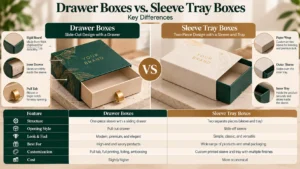
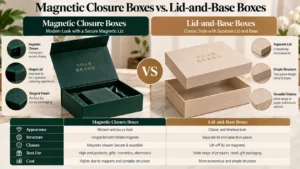
Don’t forget about the box opening. For magnetic closure gift boxes, the front flap and lid are the main surfaces; therefore, your accent should be applied here. For sleeve tray rigid boxes, the sleeve is the first surface that comes into contact with customers, and thus, it’s a great place for embossing and foil. Texture defines the haptic properties of packaging, and that’s why you need to think about how tactile and visual luxury packaging finishes complement each other during the opening sequence.
The category is relevant too. Fragrances tend to use soft-touch and foil finishes frequently, as seen in our guide to perfume box finishes. The list of all possible finishes for our boxes can be found here in luxury rigid packaging finishes.
Frequently Asked Questions
How do you differentiate between embossing and debossing?
An embossed logo will have a design elevated from the box surface whereas a debossed logo will have a design recessed into the box surface. They both help provide some texture. Embossing stands out more and is usually combined with foil for best results. Debossing is subtle and works well with subdued and minimalistic logos, especially those on soft-touch or matte boxes.
Is it possible to combine foil stamping and embossing?
Yes. It is common practice for foil stamping and embossing to go hand in hand for the logo. The design requires both techniques to be present in the design. The design can be simplified where very small details are concerned.
Is soft-touch equal to matte lamination?
They may seem alike yet differ in their properties. Both options feature a non-glossy look. In addition to it, soft-touch gives the feeling of velvet touch of the surface that you will sense upon handling of the box, whereas a regular matte finish is just a smooth surface without a velvet-like touch. You may ask for samples of materials.
Does a finish affect the production time?
Yes, sometimes. Any finish involves a separate production process and thus a box decorated with many accents will require more time than a plain box featuring only one basic surface. Standard turnarounds range from 7 to 10 business days after design approval.
Finish Your Products With Us
Tell us about your art and the desired appearance, and we will recommend a finish combination that will suit your product and budget. You can also order our Free Sample Kit for firsthand experience of our materials. Request a quote to get started