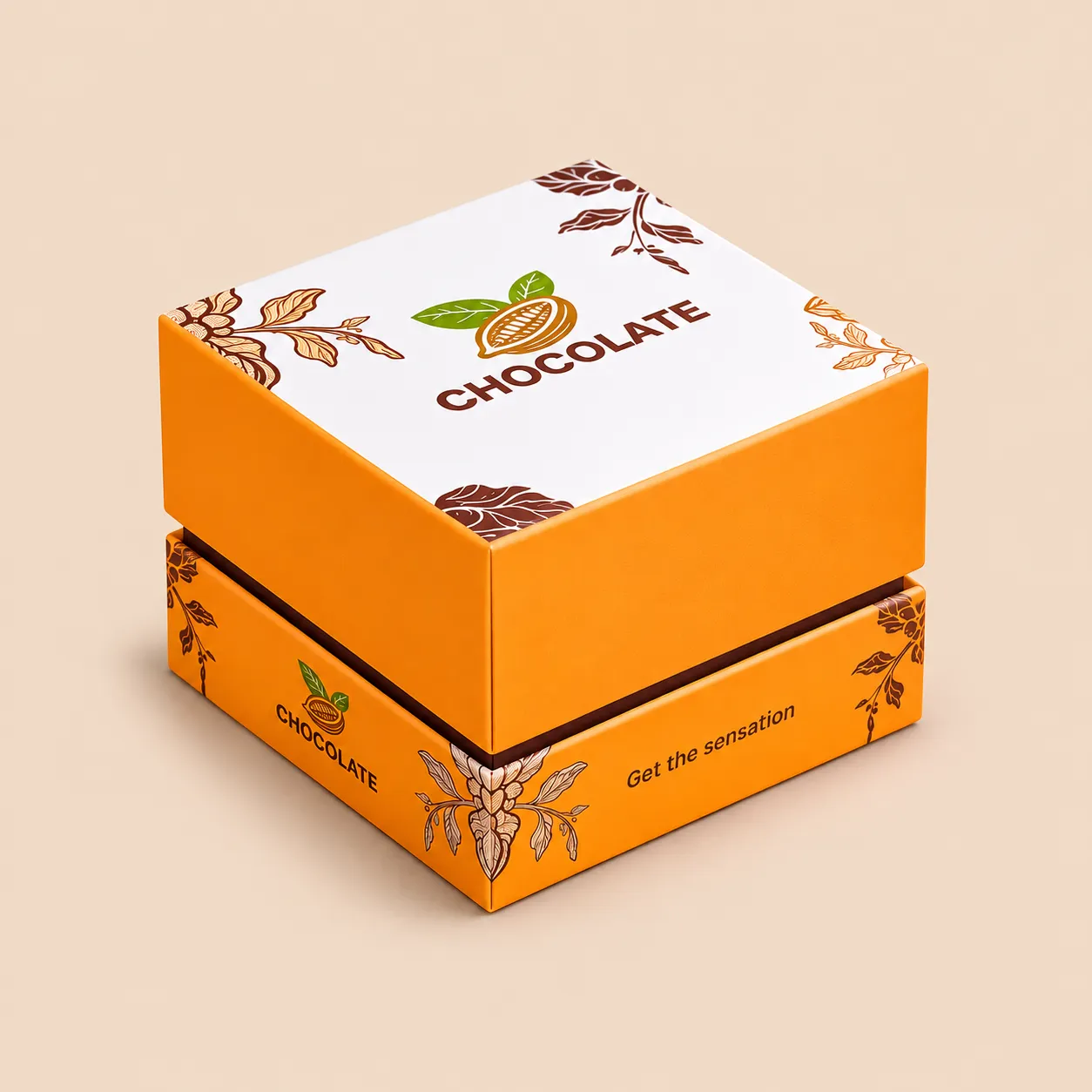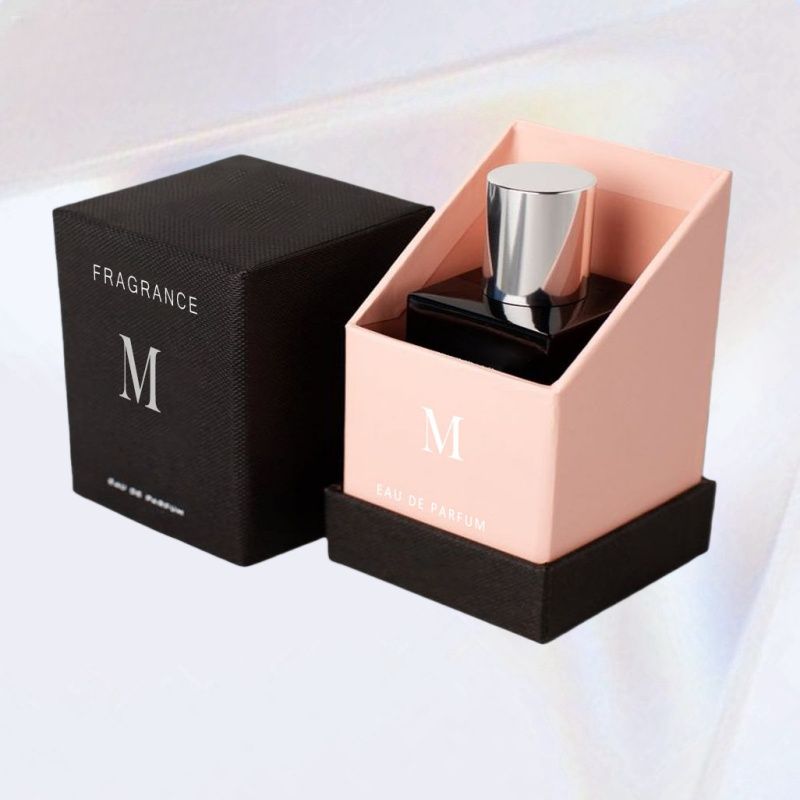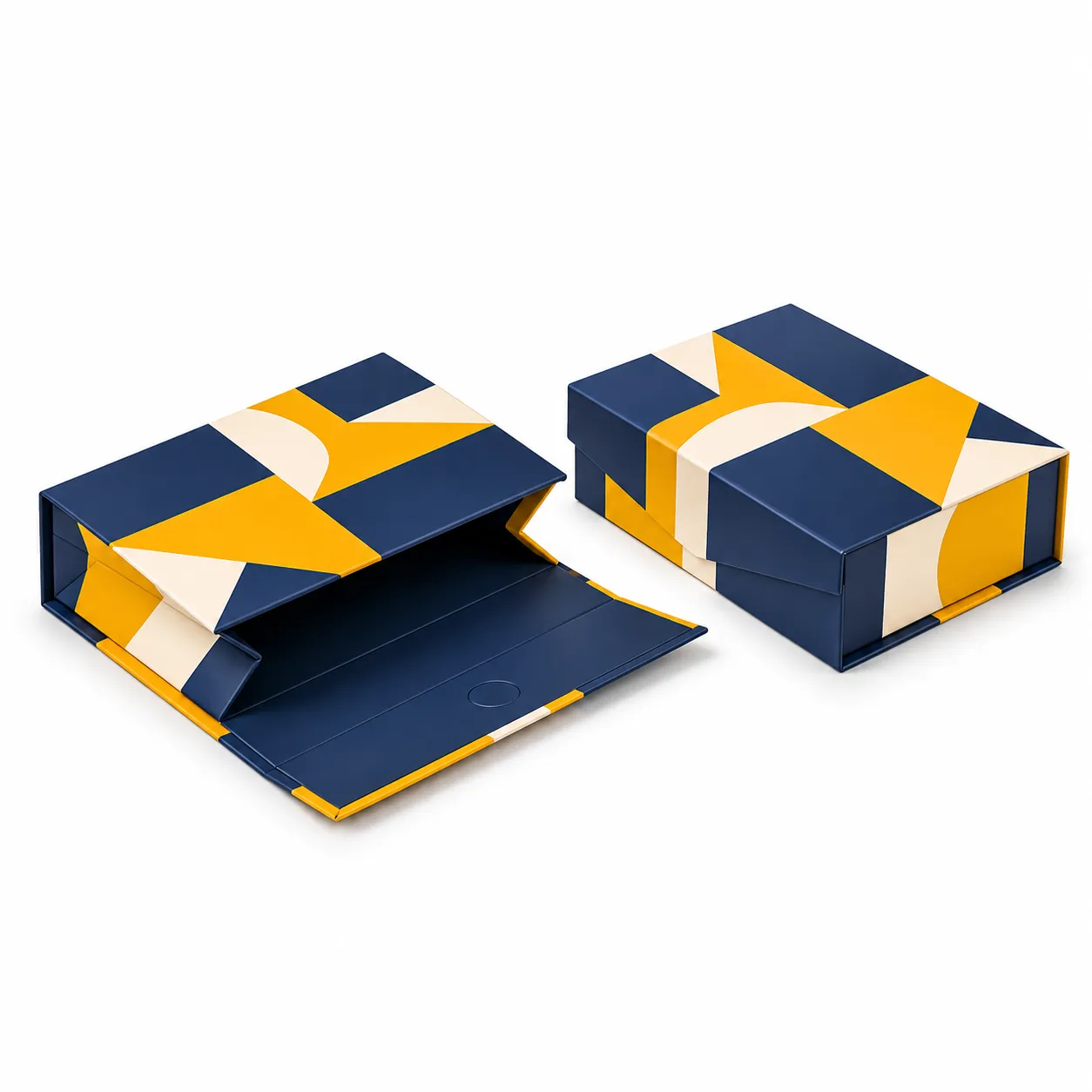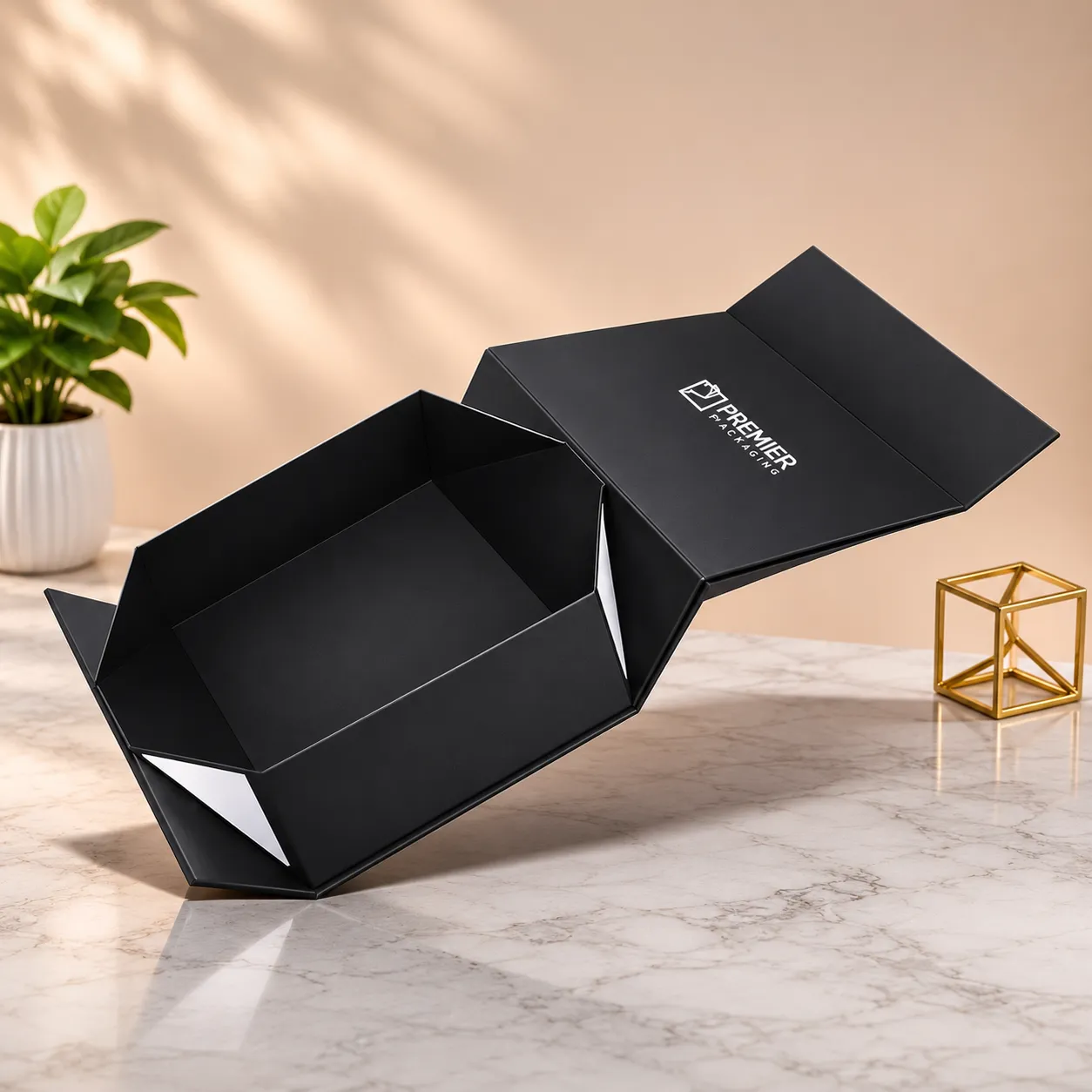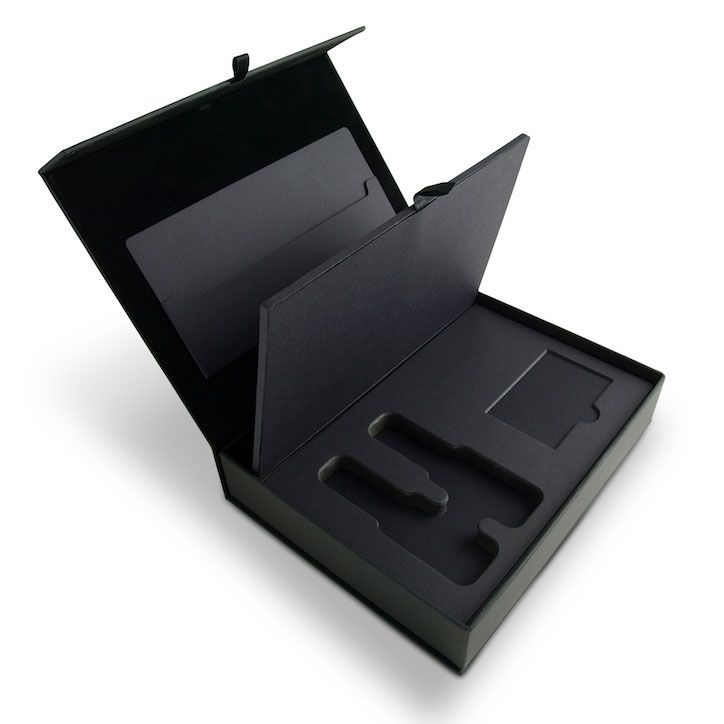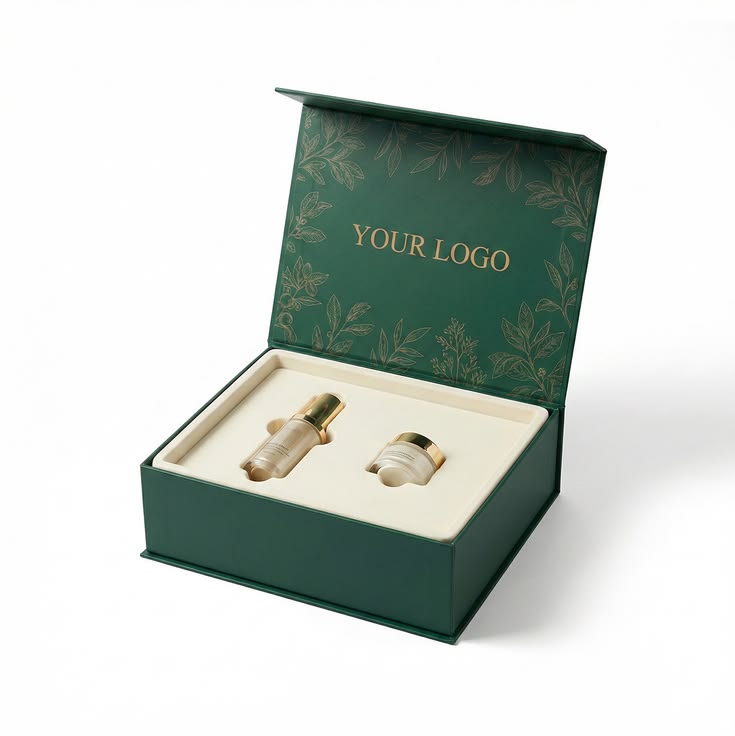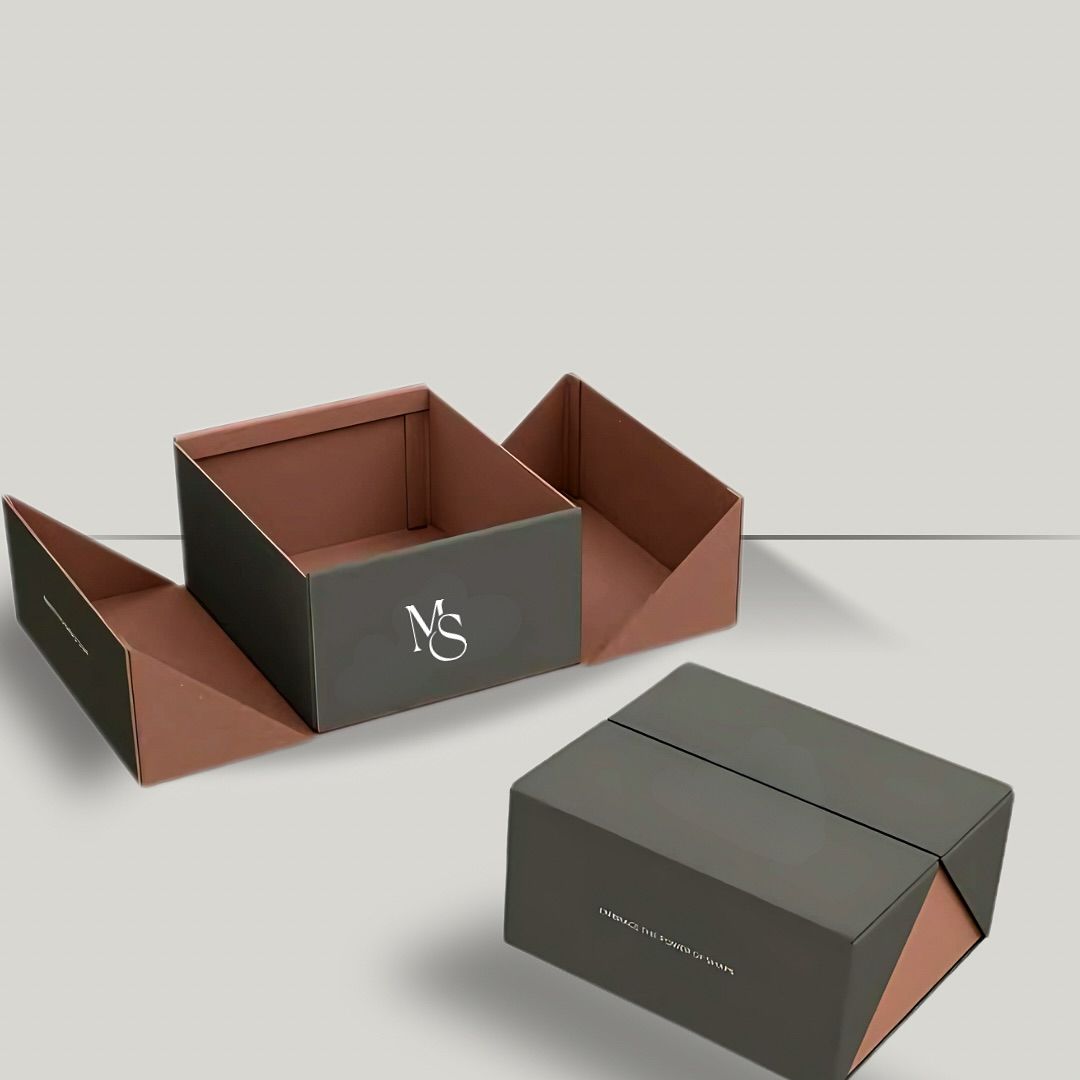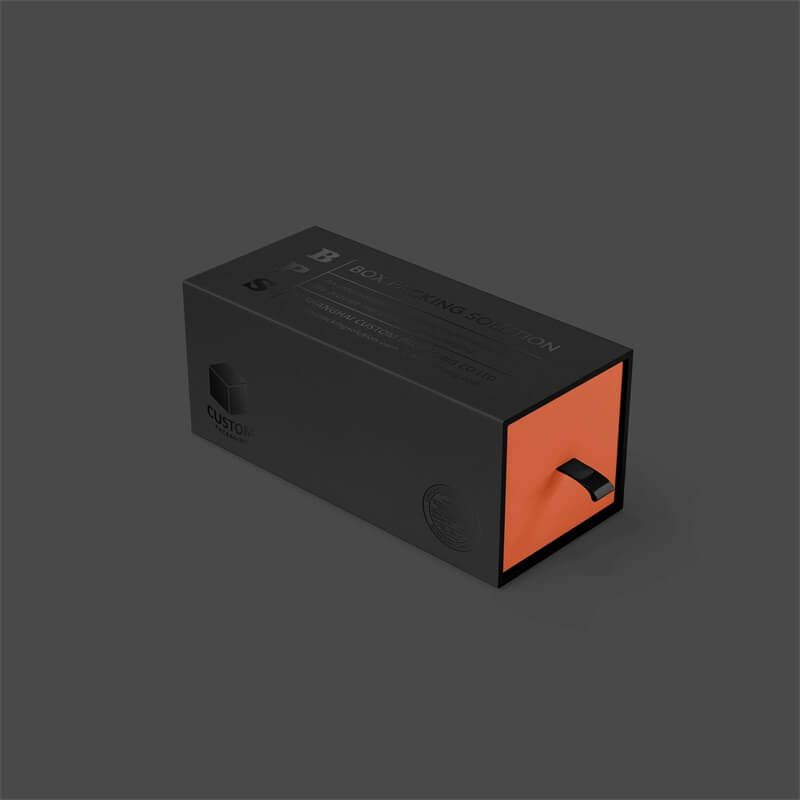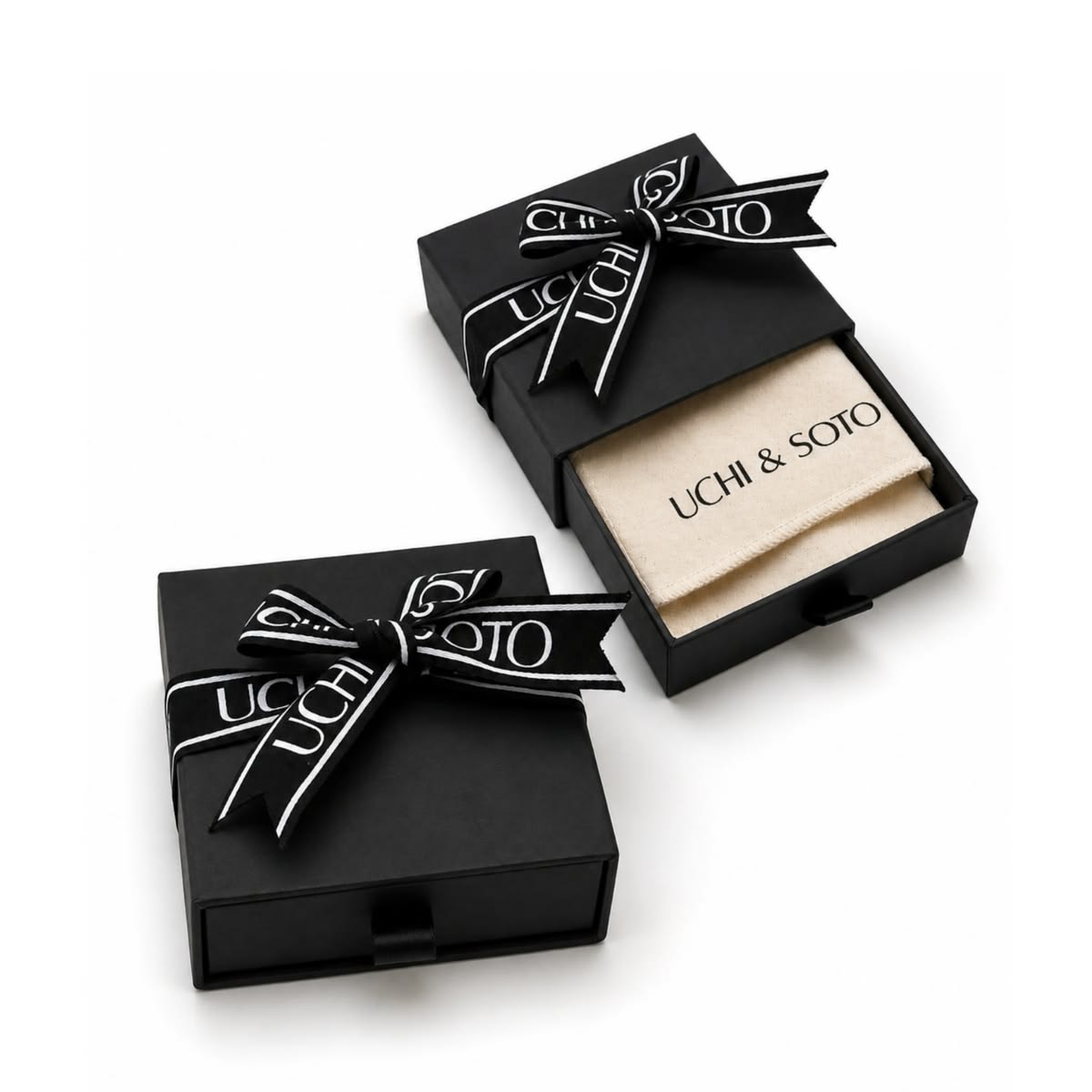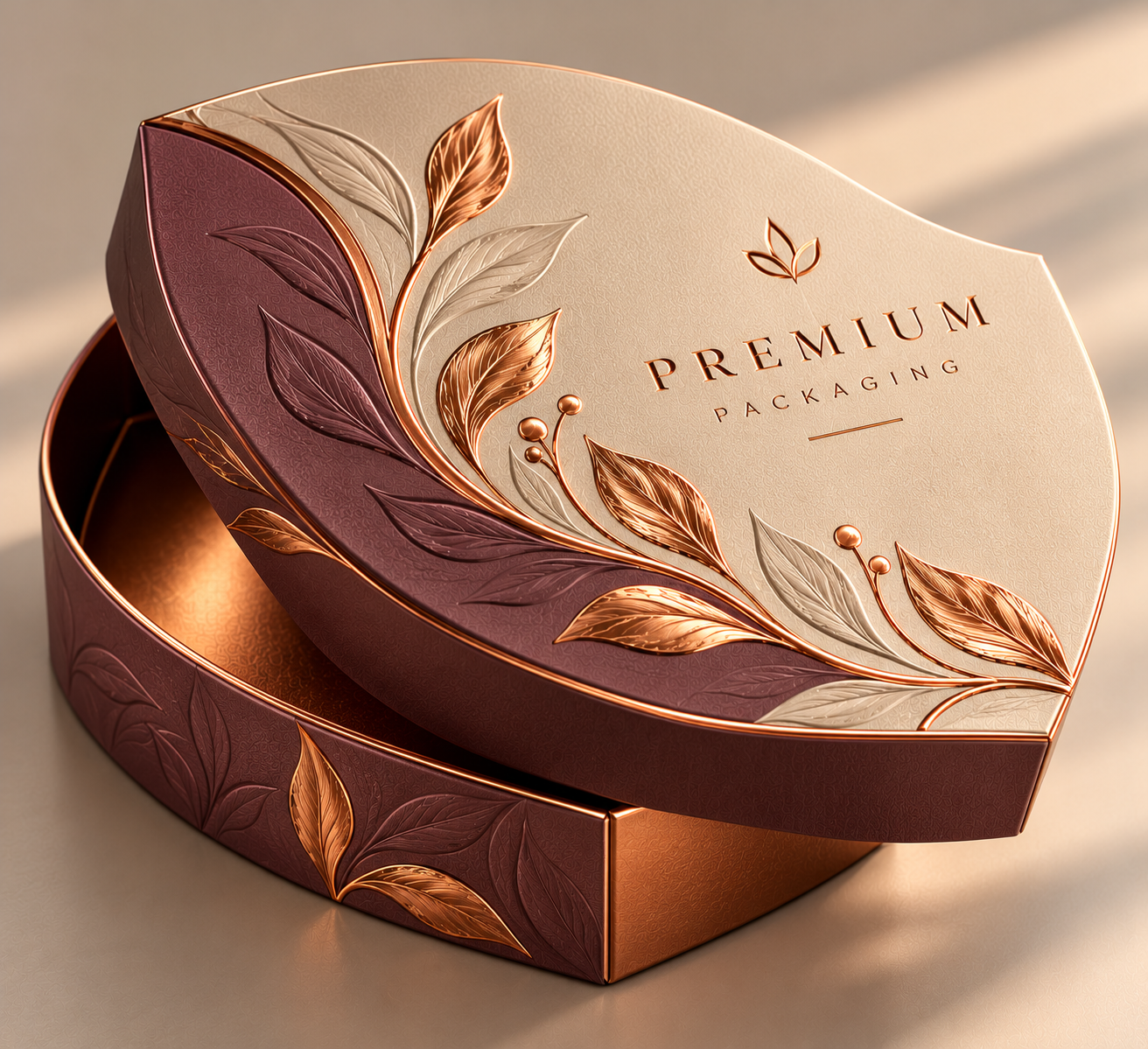


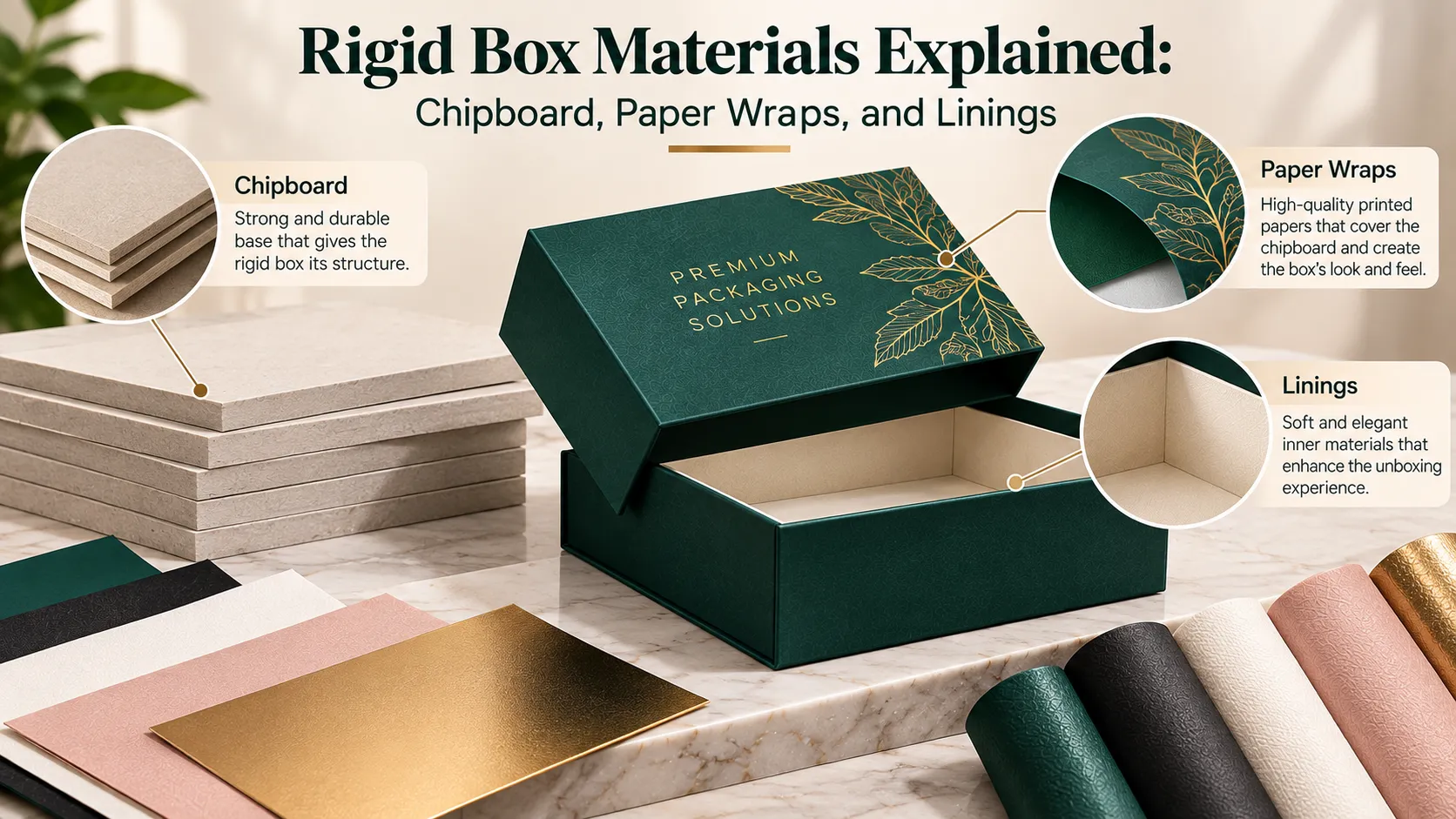








A rigid box structure comprises of three layers the board core that provides shape to the rigid box, the printed or special paper that goes around the outside layer, and the liner, which goes inside the box to provide its shape from the inside. Board serves the role of structuring, while the wrap will be your branding layer and the liner provides the initial look from inside. If you are new to rigid boxes, first read an introductory guide on what are rigid boxes made of.
The Core Board: Greyboard and Chipboard
The main component of a rigid box is a dense, uncoated board that does not bend as a cereal box would. This board is known in the industry as greyboard, chipboard, or rigid paperboard. Different suppliers may use the terms interchangeably, so it is better to ask for an actual sample than to trust the description.
Greyboard is a dense board made of compacted paper fibers. It is gray or brown and extremely stiff. It is not visible on a finished box, so its appearance is not important. What matters is density and thickness since they determine how well the walls resist pressure.
Chipboard may also be another term for the pressed board. Some suppliers use this term only for lighter grades that can be used in smaller boxes and inserts.
The board will normally be measured either in millimeters or points. The thinner board can be used when packing something light such as 2 x 2 x 1 inch ring box, while the boxed set of glass candles or boots would require a thicker board.
Paper Wraps: The Visible Surface
The board is wrapped in what some vendors refer to as a paperboard wrap, which is a printed or specialty paper applied to all the outer surfaces of the board and folded over the edges. This layer will be seen and touched by consumers; thus, it is where you make your design choices.
- Printed art paper: A smooth paper that accommodates full-color artwork, including photography and logo designs.
- Specialty and textured papers: A paper with a linen texture, felt finish, or a particular color without much printing.
- Laminated paper: Printed paper with a thin film laminated on top to provide scuff resistance and a matte, glossy, or soft touch finish.
Foil stamping, embossing, debossing, and spot UV are done to the wrap prior to wrapping it around the board. To learn about these finishes, visit our guide to finishes for rigid packaging.
Match the wrapping to the product and its handling. A dark soft touch wrap goes well with a perfume or gadget, while a natural textured paper works best with candles. Uncoated papers get scuffed up and collect fingerprints more readily than the laminated versions do.
Liners and Interior Surfaces
A liner is a paper that gets glued onto the walls and floor of the box so that the customer does not see any raw material. The liners come in plain and colored paper, printed liner with an image in the top, and velvet-type liner for jewelry and watches.
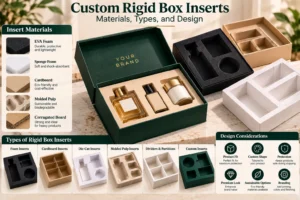
The inserts are distinct pieces of material that fit into the liner and retain the product inside. Many products are best suited for die-cut paperboard. rigid boxes with foam inserts are used for glass bottles and electronic items, where each part has an individual cut-out. The EVA, PE, and PU foam materials vary in density and texture, so it is advisable to get samples of each.
How Rigid Box Construction Comes Together
The box manufacturing process involves a certain pattern. The board is trimmed to the desired dimensions, the corners are joined, and stay tape is often added for reinforcement. Then the wrap is glued to the exterior and wrapped around the corners.
Adhesives remain concealed but play an important role. Adhesives intended specifically for joining paper and board will be used based on the style of the box. The strength of the joint ensures the flatness of the wrap, as there should be no bubbles, wrinkles, or lifted corners. While examining the box, trace your finger over each edge to determine.
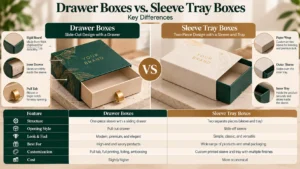
The structure also impacts the material requirements. For instance, the drawer box will require the sleeve and tray, while the magnetic box will require a hinge lid with magnets attached to the board. The Rigid boxes with lids requires two separate pieces wrapped and assembled with the correct clearance.
Printing and Finish Compatibility
Not every finish works on every paper, so plan your artwork around the wrap you choose.
| Wrap Type | Full-Color Print | Foil Stamping | Embossing or Debossing | Spot UV |
|---|---|---|---|---|
| Smooth art paper | Excellent | Good | Good | Good over lamination |
| Laminated paper | Excellent | Good | Good | Good |
| Textured specialty paper | Limited detail | Good, test first | Excellent | Usually not suited |
| Uncoated colored paper | Limited | Good | Excellent | Usually not suited |
Use this table as a guide because of differences in paper type and supplier. Textured papers will interfere with thin lines and small fonts, and so a more intricate logo would suit a foil stamp or deboss. File setup, color matching and proofs can be found under custom rigid box printing.
Thinking About Disposal
How a box will be recycled after usage depends on the entire material stackup of the box. A box comprising mainly board and paper wrapper will have a different approach compared to another box with film laminations, heavy foiling, magnets, and foam inserts, among other elements. How our boxes can be recycled can be learned from this article Are Rigid Boxes Recyclable? Materials, Design and Disposal.
How to Choose Rigid Box Materials

Here are some considerations that would limit your choice:
- Product weight and fragility: heavy or fragile product require thick board and an internal insert.
- Look of the brand: full color graphics, special paper with a single metallic graphic logo, or anything in between.
- Scuff resistance: laminated wrapping provides more protection from scratches compared to standard uncoated paper.
- Cost: the thickness of board, specialty papers, and any additional finish affects per-unit cost.
In order to evaluate your options prior to making your decision, request our Free Sample Kit containing 3 to 5 different samples of materials. You will have to pay $29.99 for shipping which will be applied to your first order. You can also browse our full range of rigid box materials and structures.
Frequently Asked Questions
What is the difference between greyboard and chipboard?
There may not be much of one – either can refer to a hard board constructed of dense paper fiber, which provides the body of the box itself. “Chipboard” may refer to lower grades of board in some cases; ask for thickness samples rather than board type names.
What paper is used to wrap rigid boxes?
Most rigid boxes are lined with an art paper that has been printed with four-color artwork, then laminated to a matte or soft-touch finish. For those boxes which require special papers with little or no artwork, specialty papers provide the perfect solution.
Does board thickness change the box size?
Yes. The thickness of the board is added to all sides of the item, which makes the outside measurements larger despite having the same size of the inner cavity. Tell the supplier the size of your product, and they will be able to work out the inner and outer measurements for you.
Can I put foil stamping on textured paper?
Most likely yes, although it depends on the depth of the texture. Too rough surfaces may distort thin lines or texts. Ask for samples and consider adjusting some elements of your logo before starting the printing process.
Choose Your Materials
It is important that you have the right combination of board, wrap and liner which works best for your product and also for the aesthetics of your company. Our design support team can help you evaluate your artwork and suggest the paper for it.
Request a custom quote with your product size and preferred materials, and we will confirm options and timelines for your order.