

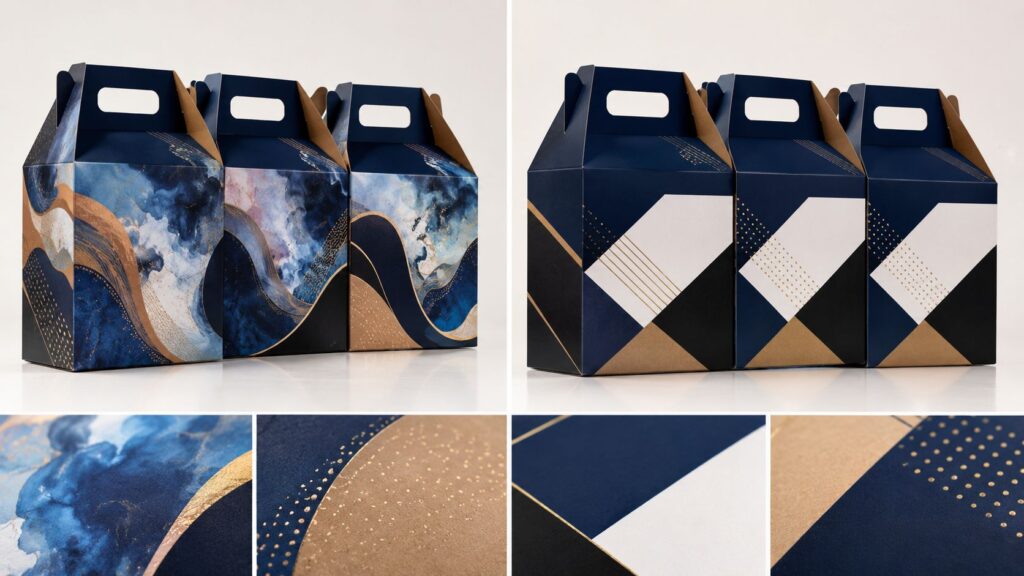





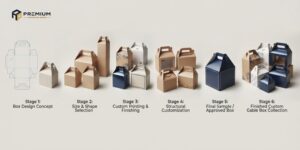

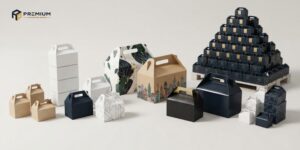
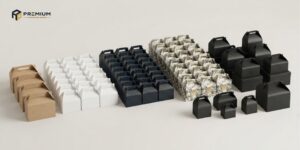
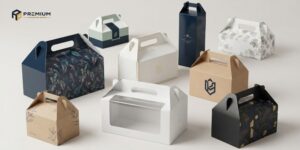
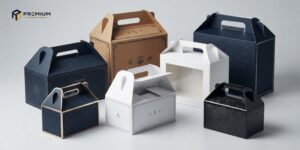

Choosing between digital vs offset printing depends primarily on your order quantity, artwork, color requirements, turnaround, and budget. Both methods can produce professional packaging, but they work differently and are suited to different production situations.
For businesses ordering custom gable boxes, digital printing can be practical for short runs, samples, and design testing, while offset printing can become more economical for larger production quantities where consistent, repeatable color output is important.
The right choice isn’t simply about which method produces the “better” box. It is about matching the printing process to your quantity, artwork, material, color requirements, and production goals.
For the complete printing and branding options, see Custom Printed Gable Boxes.
What Is Digital Printing for Gable Boxes?
Digital printing applies artwork directly from a digital file to the selected packaging material without requiring traditional printing plates.
This makes digital gable printing particularly useful when you need flexibility with quantities or want to test a design before committing to a large production run.
Digital printing is commonly suitable for:
- Small packaging orders
- Product samples
- New product launches
- Seasonal designs
- Limited-edition packaging
- Multiple artwork variations
- Short-run packaging
- Businesses testing new branding
One of its main advantages is reduced setup requirements, which can make smaller orders more practical.
What Is Offset Printing for Gable Boxes?
Offset printing uses printing plates to transfer the artwork onto the packaging substrate.
It is traditionally associated with larger commercial production runs where the initial setup can be distributed across a higher number of boxes.
Offset gable printing can be particularly useful when a business requires:
- Large-volume production
- Consistent artwork across thousands of boxes
- Precise brand colors
- PMS color matching
- Long-term packaging programs
- Repeat production runs
The economics can become more attractive as the order quantity increases.
Digital vs Offset Printing: Quick Comparison
| Factor | Digital Printing | Offset Printing |
| Best suited for | Short runs and testing | Larger production runs |
| Setup | Lower setup requirements | Requires plate/setup preparation |
| Short-run printing | Excellent fit | Usually less economical |
| Bulk printing | Can work, depending on project | Often preferred for high quantities |
| Artwork changes | Flexible | Less flexible after setup |
| Variable designs | More practical | Less practical |
| PMS matching | Project-dependent | Strong option for precise spot colors |
| Color consistency | Good | Excellent for controlled large runs |
| Initial cost | Generally lower for small orders | Higher setup cost |
| Unit economics | Often favorable at lower quantities | Often improves at higher quantities |
| Samples | Well suited | Less practical |
| Large repeat orders | Possible | Often advantageous |
Important: Exact pricing and suitability depend on the material, dimensions, artwork, quantity, finishing requirements, and supplier production setup.
Digital Printing for Short-Run Gable Boxes
One of the biggest advantages of digital printing is its suitability for short-run printing.
Imagine a bakery launching a new seasonal product and needing only a few hundred boxes initially. Producing a large quantity through a traditional setup may create unnecessary upfront costs.
Digital production can allow the business to test:
- A new logo
- Seasonal artwork
- New product packaging
- Different color combinations
- Limited-edition designs
If the design performs well, the company can later move toward larger-scale production.
Offset Printing for Bulk Gable Boxes
Offset printing becomes particularly interesting when order quantities increase.
For example, a retailer requiring tens of thousands of identical gable boxes may benefit from spreading the initial setup costs across a much larger production quantity.
This is why bulk printing and offset production are often considered together.
However, quantity alone should not determine the decision. Material, finishing, colors, artwork complexity, and production schedule should also be evaluated.
For bulk packaging requirements, Buying Gable Boxes in Bulk: MOQ, Pricing, Materials & Customization.
Which Method Provides Better Color Consistency?
Color consistency matters when packaging must closely follow established brand guidelines.
Businesses may have specific:
- Logo colors
- Corporate colors
- PMS references
- Packaging color standards
- Product-line color systems
Offset printing can be advantageous for projects where highly controlled repeat production and spot-color reproduction are important.
Digital printing can also produce high-quality full-color graphics, but the exact color reproduction depends on the printer, substrate, ink system, and production specifications.
For brands with strict color requirements, discuss PMS matching before production rather than assuming every printing process will reproduce colors identically.
CMYK vs PMS for Gable Box Printing
Understanding CMYK and PMS helps when selecting a printing method.
CMYK
CMYK uses four process colors:
- Cyan
- Magenta
- Yellow
- Black
It works well for:
- Photographic artwork
- Detailed illustrations
- Gradients
- Full-color packaging
- Complex graphics
PMS
PMS refers to standardized spot colors used for more controlled color reproduction.
PMS matching can be particularly useful for:
- Brand logos
- Signature colors
- Corporate packaging
- Consistent retail packaging
- Multi-order packaging programs
If exact brand color reproduction is critical, provide the correct color references during the quotation and artwork stage.
Digital Printing vs Offset: Cost Considerations
Printing cost isn’t determined by the printing process alone.
The total price can include:
- Box size
- Material
- Quantity
- Number of printed colors
- Printing method
- Finishing
- Die-cutting
- Window cutouts
- Setup
- Artwork requirements
- Shipping
Why Digital Can Be Cost-Effective for Small Orders
Digital printing generally requires less traditional setup, making it attractive for smaller quantities.
You may avoid paying significant setup costs for an order that doesn’t justify them.
Why Offset Can Become More Cost-Effective at Scale
Offset involves more initial preparation, but those costs can become less significant on a per-box basis as production volume increases.
This creates an important principle:
Small quantity → prioritize flexibility and setup efficiency.
Large quantity → evaluate unit economics and production consistency.
For detailed pricing, How Much Do Custom Gable Boxes Cost? Complete Pricing Guide.
Which Printing Method Is Better for Custom Gable Boxes?
There is no universal winner.
Choose Digital Printing When:
- You need a short production run.
- You are testing a new packaging design.
- You need multiple artwork variations.
- You want greater flexibility.
- You are launching a limited-edition product.
- You don’t want extensive traditional setup for a smaller order.
Consider Offset Printing When:
- You need a large production quantity.
- Your artwork will remain unchanged.
- Color consistency is important.
- You require PMS spot colors.
- You have an established packaging program.
- Large-volume unit economics justify the setup.
Digital vs Offset Printing for Different Businesses
Bakeries
A bakery launching seasonal cupcake or pastry packaging may benefit from digital printing when quantities are limited or designs change frequently.
For established high-volume bakery packaging, offset may be worth evaluating.
Restaurants
Restaurants often need practical packaging in recurring quantities. The appropriate method depends on the number of locations, order volume, and frequency of artwork changes.
For more Information: Gable Boxes for Restaurants & Takeout Food: Packaging Guide
Retail Brands
Retail companies may prioritize consistent branding and color reproduction across larger packaging programs.
Gable Boxes for Retail Products: Branding, Display & Customer Experience
Gift & Event Businesses
Event packaging frequently involves limited-edition artwork or changing themes, making digital production useful for certain short runs.
Does Digital Printing Look Less Professional?
Not necessarily.
Modern digital printing can produce sharp graphics, detailed artwork, and professional full-color packaging.
The perceived quality of a finished gable box also depends on:
- Material quality
- Artwork resolution
- Color management
- Printing equipment
- Finishing
- Structural construction
- Quality control
Therefore, don’t choose a printing method simply because one sounds more “premium.”
The better question is whether the selected process can deliver the visual quality and production consistency your packaging requires.
What About Specialty Finishes?
If your design requires additional finishing, discuss it alongside the printing method.
Common options include:
- Gold foil
- Silver foil
- Spot UV
- Embossing
- Debossing
- Matte lamination
- Gloss lamination
- Soft-touch coating
For metallic branding, Gold Foil Gable Boxes: When Metallic Packaging Makes Sense for Your Brand.
For broader printing options, Custom Printed Gable Boxes: Printing Methods, Finishes & Branding Options.
How to Choose the Right Printing Method
Use this simple decision process:
Step 1: Determine Your Quantity
Are you ordering a few hundred boxes or several thousand?
Step 2: Review Your Artwork
Is the artwork identical across the entire order, or do you need multiple versions?
Step 3: Identify Your Color Requirements
Do you simply need full-color CMYK printing, or does your brand require specific PMS colors?
Step 4: Choose Your Material
Paperboard, kraft, SBS, and corrugated substrates can produce different visual results.
Step 5: Consider Finishing
Determine whether foil, UV, embossing, or lamination is required.
Step 6: Compare Total Project Cost
Don’t compare only the printing price. Consider setup, materials, finishing, quantity, and shipping together.
Step 7: Confirm Production Timeline
Your required delivery date may influence the most suitable production method.
Digital vs Offset Printing: Final Verdict
For short-run printing, product testing, limited editions, and frequently changing artwork, digital printing is often the more flexible option.
For bulk printing, established packaging designs, high-volume production, and projects requiring controlled color reproduction, offset printing may offer stronger production economics and consistency.
The best solution depends on the complete project—not simply the number of boxes.
If you’re unsure which option fits your order, compare quantity, artwork, material, PMS requirements, finishing, turnaround, and total cost before making the final decision.
FAQs About Digital & Offset Gable Box Printing
Is digital or offset printing better for gable boxes?
Neither is universally better. Digital printing is generally more flexible for short runs, while offset can be advantageous for larger, consistent production runs.
Is digital printing good for small quantities?
Yes. Digital printing is commonly suited to short runs, samples, limited editions, and packaging tests.
Is offset printing better for bulk orders?
Offset can become more economical for larger quantities because setup costs can be distributed across more boxes.
Can digital printing use CMYK?
Yes. CMYK is commonly used for full-color digital packaging artwork.
Can offset printing use PMS colors?
Yes. Offset printing can be suitable for projects requiring specific PMS spot colors.
Which printing method has better color consistency?
Offset can provide highly controlled and repeatable color production, particularly for established high-volume packaging programs. Actual results depend on the printer, substrate, inks, and color-management process.
Can both methods be used for custom printed gable boxes?
Yes. The appropriate method depends on the order specifications, artwork, material, quantity, and finishing requirements.