

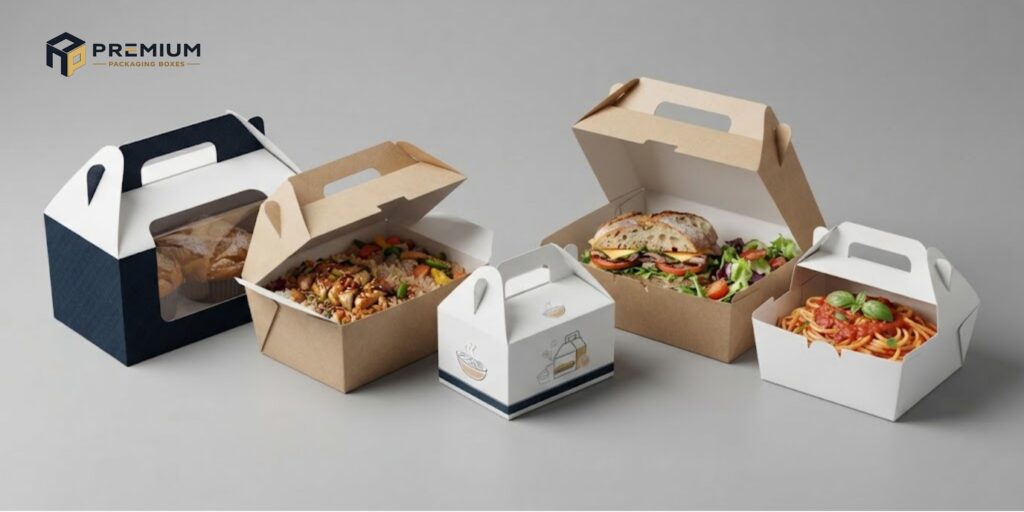





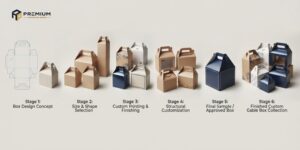

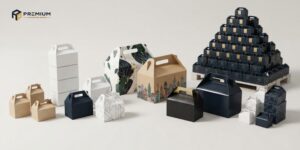
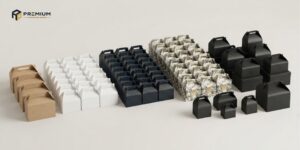
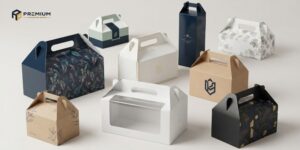
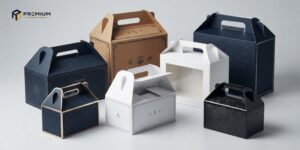

Gable boxes for restaurants provide a practical packaging format for takeout meals, bakery items, desserts, snacks, and other food orders. Their built-in handle makes orders easier to carry, while custom sizes, food-grade materials, printing, and suitable protective coatings allow restaurants to match the packaging with their menu and brand.
For restaurants, packaging needs to do more than contain food. It needs to support food delivery packaging, protect the order during transportation, remain convenient for customers, and present the restaurant professionally.
The right box depends on the type of food, portion size, weight, grease or moisture content, and expected delivery conditions.
For broader applications, see Gable Boxes for Food Packaging.
Why Do Restaurants Use Gable Boxes?
Restaurant packaging needs to balance functionality with presentation.
A gable-style structure can provide several practical benefits:
- Built-in carrying handle
- Easy takeaway handling
- Custom dimensions
- Food-appropriate paperboard options
- Custom printing
- Flat shipping and storage
- Optional windows
- Suitable grease and moisture barriers
- Secure closure
- Strong brand visibility
The built-in handle is particularly useful for customers carrying takeaway orders from a restaurant to their home, office, event, or vehicle.
What Foods Can Go in Restaurant Gable Boxes?
The appropriate box depends on the food being packaged.
Fried Foods
Fried chicken, fries, wings, and other fried foods may require suitable grease-resistant packaging and enough ventilation to help manage moisture.
Burgers & Sandwiches
Gable structures can be customized around individual meals, combo orders, or larger takeaway portions.
Bakery & Dessert Items
Restaurants serving cakes, pastries, cookies, brownies, and desserts can use specialized sizes for these products.
Pasta & Rice Dishes
Containers for heavier meals need sufficient structural strength and an appropriate internal fit.
Catering Orders
Larger gable formats can work for selected catering applications where portability and branded presentation are important.
Snacks & Side Dishes
Smaller structures can be used for:
- Fries
- Nuggets
- Cookies
- Pastries
- Sweets
- Appetizers
- Side dishes
Choosing the Right Restaurant Gable Box Size
There is no universal size that works for every restaurant menu.
Before ordering restaurant gable boxes, consider:
- Food portion size
- Product dimensions
- Number of items
- Total loaded weight
- Food temperature
- Grease level
- Moisture content
- Delivery distance
- Required internal clearance
Small Gable Boxes
Useful for snacks, desserts, sides, and individual portions.
Medium Gable Boxes
Suitable for many standard takeaway meals and food combinations.
Large Gable Boxes
Useful for larger meals, family portions, catering, and multiple-item orders.
For more detailed sizing guidance, connect this article to Small vs. Large Gable Boxes: How to Choose the Right Size.
Food-Safe Materials for Restaurant Packaging
Material selection is particularly important when packaging comes into contact with food.
Depending on the application, restaurants may consider:
- Food-grade paperboard
- SBS paperboard
- Kraft paperboard
- Corrugated board for selected applications
- Recycled board where appropriate
- Grease-resistant coatings
- Moisture barriers
The material should be selected according to the food type and intended use rather than simply choosing the thickest available board.
For food-safety considerations, see Are Gable Boxes Food Safe?.
Grease-Resistant Packaging for Takeout Food
Grease can weaken or stain unsuitable packaging.
Foods such as fried chicken, burgers, fries, and certain pastries can transfer oils into paperboard.
For these products, restaurants should evaluate whether the packaging requires a suitable grease-resistant food packaging solution.
Consider:
- Food oil content
- Contact duration
- Interior coating
- Board construction
- Food temperature
- Expected transportation time
The goal is to maintain structural performance while keeping the exterior presentable.
Moisture & Condensation Considerations
Moisture can affect food packaging in several ways.
Hot food can generate steam and condensation, while sauces and wet foods can create additional moisture inside the package.
Packaging selection should therefore consider:
- Steam
- Condensation
- Sauces
- Wet ingredients
- Refrigerated foods
- Hot takeaway meals
A box designed for dry bakery products may not necessarily be appropriate for a hot, saucy meal.
Spill-Resistant Packaging for Restaurants
Restaurants need packaging that helps reduce the possibility of accidental opening and food movement during transportation.
Spill-resistant packaging depends on several factors:
- Secure closure
- Appropriate box dimensions
- Correct structural strength
- Proper food placement
- Suitable interior barriers
- Controlled movement inside the package
The box itself cannot guarantee that food will never spill. However, a properly engineered structure can help keep the order contained during normal handling and transportation.
Gable Boxes for Food Delivery
Food delivery creates additional packaging requirements because the order may experience:
- Vehicle movement
- Turning and braking
- Stacking
- Handling between locations
- Temperature changes
- Longer transportation times
For delivery orders, select packaging based on the food’s weight, moisture, grease level, and transportation requirements.
A built-in handle can also make the order easier for customers and delivery staff to carry.
Takeaway Gable Boxes & Customer Convenience
The integrated handle is one of the most recognizable features of a gable box.
Instead of requiring a separate shopping bag, customers can carry the package directly by its handle.
This can be useful for:
- Restaurant takeaway
- Office lunch orders
- Catering
- Family meal orders
- Dessert orders
- Event food
- Food pickup
This combination of carryout packaging and branded presentation makes gable boxes particularly useful for restaurants that want packaging to remain visible outside the premises.
Custom Printed Restaurant Gable Boxes
Restaurant packaging is also a branding opportunity.
Custom printing can include:
- Restaurant logo
- Brand colors
- Menu messaging
- Website
- QR code
- Social media handles
- Promotional offers
- Seasonal artwork
- Contact information
A customer may carry a branded package from the restaurant to their home, office, or event. This creates an additional physical brand touchpoint.
For printing options, see Custom Printed Gable Boxes.
Branded Restaurant Packaging & Customer Experience
Packaging contributes to the customer’s perception of a restaurant.
A well-designed package can communicate:
Clean → Organized → Professional → Branded → Convenient
The packaging should match the restaurant’s overall identity.
For example:
- A premium restaurant may choose white SBS with refined printing.
- An artisan restaurant may prefer kraft paperboard.
- A fast-casual brand may use bold custom graphics.
- A sustainable restaurant may prefer recyclable or plastic-free options where appropriate.
Kraft Gable Boxes for Restaurants
Kraft packaging can provide a natural, understated appearance that works well with restaurants emphasizing handmade food or sustainability.
It can be particularly suitable for:
- Artisan restaurants
- Organic food brands
- Cafes
- Bakeries
- Food trucks
- Natural-food businesses
See Kraft Gable Boxes for the product application.
Window Gable Boxes for Food Presentation
A window can allow customers to see the packaged product without opening the box.
This can be useful for:
- Cookies
- Pastries
- Cakes
- Desserts
- Bakery items
- Giftable food products
Window packaging can support product presentation, but the window material and construction should be appropriate for the intended food application.
Explore Gable Boxes With Window.
Gable Boxes for Restaurant Catering
Catering orders create different packaging requirements from individual takeaway orders.
Restaurants may need to package:
- Multiple meals
- Dessert assortments
- Corporate lunches
- Party food
- Event favors
- Side dishes
- Gift sets
For catering, consider:
Capacity
The box needs to hold the intended quantity without excessive compression.
Load Strength
Heavier orders require suitable board and structural construction.
Portability
Handles make individual packages easier to distribute.
Branding
Custom printing can keep the restaurant visible throughout the event.
Buying Gable Boxes in Bulk for Restaurants
Restaurants with consistent takeaway volumes may benefit from bulk packaging orders.
Before purchasing bulk gable boxes, evaluate:
- Average weekly usage
- Seasonal demand
- Storage capacity
- Box dimensions
- Material requirements
- Printing requirements
- Minimum order quantity
- Unit pricing
- Production time
- Shipping requirements
Buying larger quantities can reduce the unit cost, but restaurants should avoid ordering more packaging than they can reasonably store or use.
For commercial purchasing guidance, see Buying Gable Boxes in Bulk.
How Much Do Restaurant Gable Boxes Cost?
The final price depends on several variables rather than box style alone.
Common cost factors include:
- Box dimensions
- Material
- Board thickness
- Printing coverage
- Number of colors
- Special finishes
- Window requirements
- Order quantity
- Structural complexity
- Shipping
For bulk orders, higher quantities can generally reduce the per-unit price.
Premium Packaging Boxes offers wholesale pricing starting from around $0.45 per unit on bulk orders, depending on specifications and quantity.
For a broader breakdown, see How Much Do Custom Gable Boxes Cost? Complete Pricing Guide.
Restaurant Gable Box Design Considerations
An effective restaurant package should balance branding and functionality.
Consider the following:
Front Panel
Use the primary logo or brand message.
Side Panels
Add website, social media, QR codes, or product information.
Handle Area
Keep important graphics clear of folds and structural locking areas.
Interior
Consider whether interior printing or coatings are appropriate for the application.
Closure
Make sure the design is easy for staff to assemble and secure.
Common Restaurant Packaging Mistakes
Choosing Packaging Based Only on Appearance
A visually attractive box may not be suitable for hot or greasy foods.
Using the Same Box for Every Menu Item
Different foods have different packaging requirements.
Ignoring Product Movement
Excess internal space can allow food to shift during delivery.
Using Insufficient Board Strength
Heavy meals can place additional stress on the bottom structure and handles.
Forgetting Storage Requirements
Large packaging quantities require adequate storage space.
Skipping Product Testing
Always test packaging with the actual food, weight, temperature, and transportation conditions before committing to a large production run.
Restaurant Gable Boxes vs. Traditional Takeout Bags
Gable boxes and traditional bags serve different purposes.
| Feature | Gable Boxes | Traditional Takeout Bags |
| Built-in handle | Yes | Usually requires separate handles |
| Product structure | Rigid/semi-rigid | Flexible |
| Branding surface | Large | More limited |
| Product presentation | Strong | Basic |
| Product protection | Depends on construction | Limited structural support |
| Custom sizing | Available | Available |
| Food suitability | Depends on material/design | Depends on bag construction |
| Gift-style presentation | Strong | Limited |
For restaurants focused on branded takeaway presentation, gable packaging can combine carrying convenience with a more structured appearance.
How to Choose the Right Gable Box for Your Restaurant
Use this simple process:
1. Identify the Food
Determine whether you are packaging meals, fried foods, desserts, bakery products, or mixed orders.
2. Measure the Product
Record the length, width, and height.
3. Calculate the Loaded Weight
Consider the total food weight rather than the empty container.
4. Evaluate Grease & Moisture
Determine whether the packaging requires an appropriate barrier.
5. Select the Material
Choose kraft, SBS, paperboard, corrugated, or another suitable construction.
6. Choose the Printing
Add your logo, brand colors, graphics, and required information.
7. Test the Box
Test the packaging with the actual product and expected delivery conditions.
8. Order in the Appropriate Quantity
Compare expected usage, storage space, MOQ, and unit pricing before placing a bulk order.
Frequently Asked Questions
Are gable boxes good for restaurant takeout?
Yes. They can provide a convenient carrying format for many takeaway applications when the material, dimensions, closure, and structure are appropriate for the food.
Can restaurants customize gable boxes with their logo?
Yes. Custom printing can include logos, brand colors, promotional messages, QR codes, and other artwork.
Are gable boxes suitable for food delivery?
They can be suitable for selected food delivery applications, provided the box is designed and manufactured for the food type, weight, grease, moisture, and transportation conditions.
Can gable boxes hold greasy food?
Some constructions can incorporate suitable grease-resistant features, but the packaging should be selected specifically for the food’s oil and moisture characteristics.
Are restaurant gable boxes available in bulk?
Yes. Bulk ordering is available for restaurants that require recurring takeaway or delivery packaging, with pricing depending on size, material, printing, quantity, and specifications.
Final Takeaway
Gable boxes for restaurants combine convenient carrying, structured food packaging, and customizable branding in one format. They can be adapted for takeaway meals, desserts, bakery products, catering, and selected food delivery applications.
The right restaurant gable boxes should be selected based on the food’s size, weight, grease, moisture, temperature, and transportation requirements. For high-volume restaurants, custom sizing and bulk ordering can also help create a consistent packaging system across the menu.