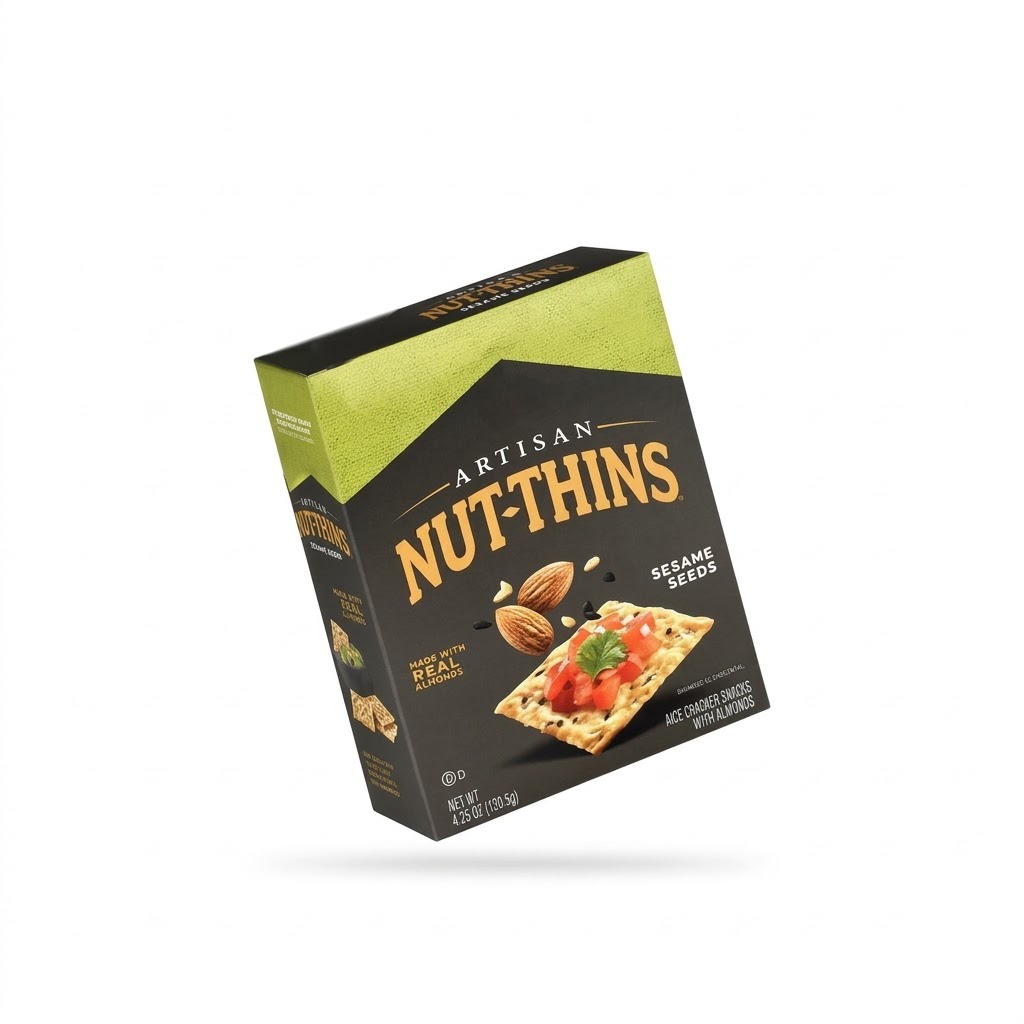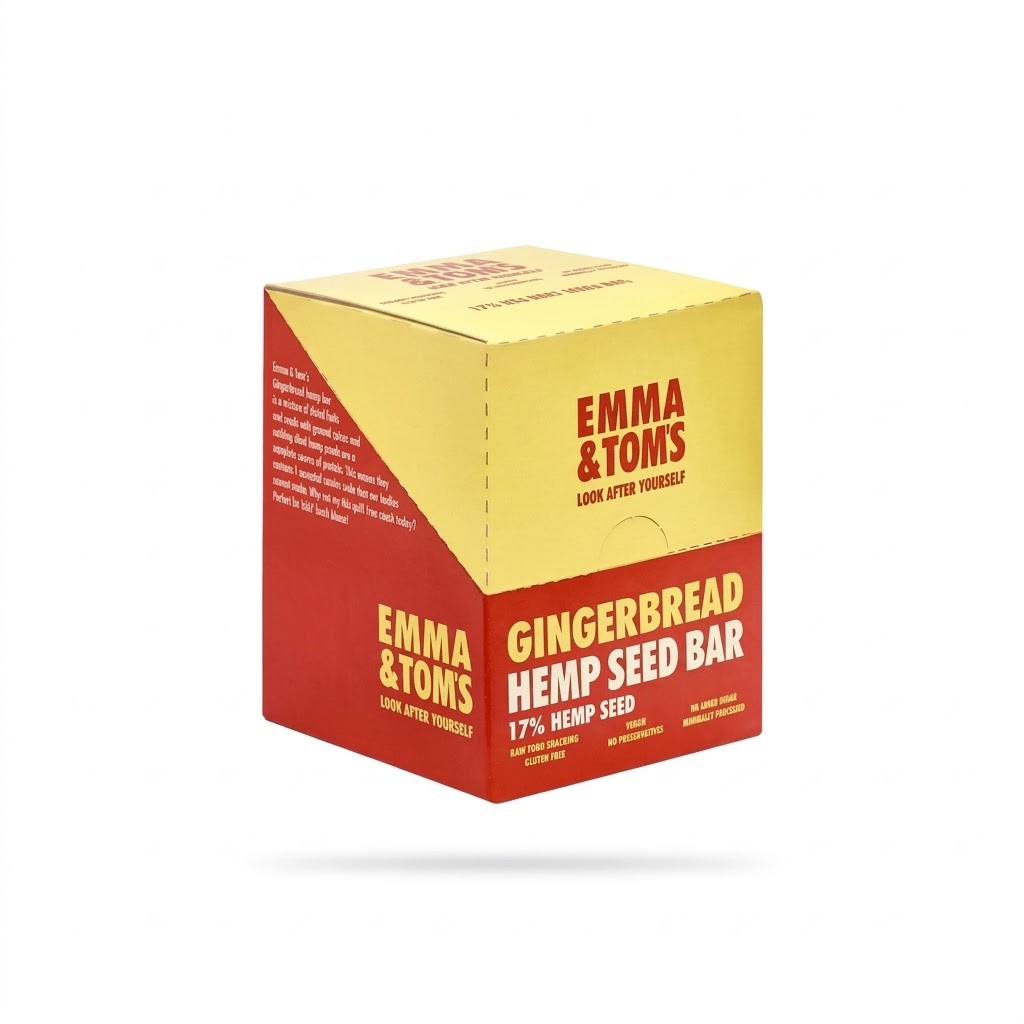








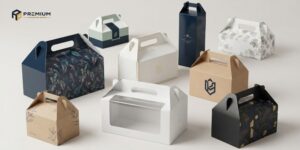
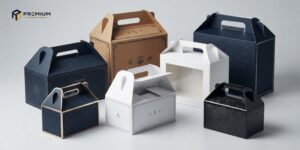

Custom gable boxes are made through a structured packaging production process that combines structural design, material selection, dieline creation, printing, die cutting, folding, gluing, finishing, and quality control. The process starts with the product’s dimensions and packaging requirements and ends with finished boxes ready for delivery.
Unlike standard stock packaging, custom gable boxes are engineered around the product. The handle, top panels, locking mechanism, bottom structure, dimensions, printing, and finishing can all be customized to create packaging that fits both the product and brand.
Custom Gable Box Manufacturing Process at a Glance
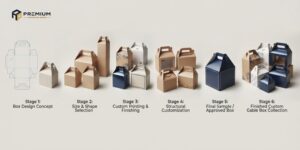
The typical gable box manufacturing process follows these stages:
- Product and packaging requirement analysis
- Material and thickness selection
- Structural packaging design
- Dieline creation
- Digital proof and approval
- Printing
- Die cutting and creasing
- Folding and gluing
- Surface finishing
- Quality control inspection
- Final packing and shipping
Each stage affects the appearance, strength, functionality, and consistency of the finished package.
Step 1: Product & Packaging Requirement Analysis
The first stage of custom box manufacturing is understanding what the packaging needs to hold and how it will be used.
The packaging team typically evaluates:
- Product length, width, and height
- Product weight
- Number of products per box
- Product shape
- Required internal space
- Storage conditions
- Transportation requirements
- Food-contact requirements where applicable
- Branding requirements
- Desired box style
- Expected order quantity
This information establishes the foundation for the structural design.
For example, a lightweight gift item may require a different construction from a food product, cake, or heavier retail product.
Step 2: Select the Right Packaging Material
Once the product requirements are established, the appropriate board is selected.
Common materials include:
- Kraft paperboard
- White paperboard
- SBS paperboard
- Recycled board
- Corrugated cardboard
- Food-grade paperboard
Material selection affects the box’s rigidity, print quality, folding performance, appearance, and overall durability.
The board thickness should also correspond to the product weight and dimensions.
For a detailed explanation, see How to Choose the Right Gable Box Thickness for Your Product.
Step 3: Create the Structural Packaging Design
The next stage is developing the physical structure of the gable box.
A gable box typically includes:
- Front panel
- Back panel
- Side panels
- Gable-shaped top
- Integrated handle
- Locking tabs
- Bottom closure
- Glue flaps
- Fold and crease lines
The design needs to balance appearance with structural performance.
A well-designed box should fold correctly, hold the intended product, remain closed during handling, and allow the customer to carry it comfortably.
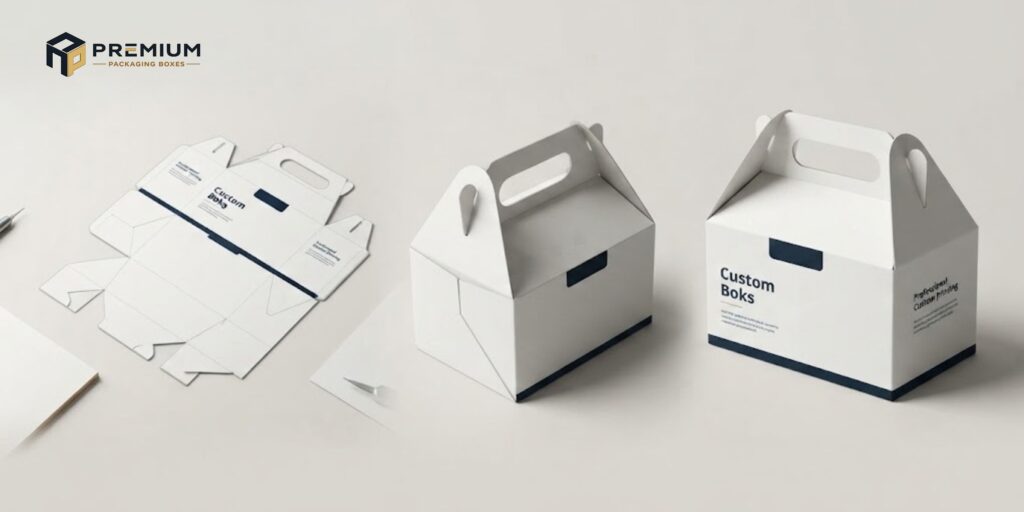
Step 4: Create the Gable Box Dieline
The gable box dieline is the technical template used to manufacture the physical package.
It defines where the material will be:
- Cut
- Creased
- Folded
- Glued
- Locked
The dieline also establishes the final dimensions and panel configuration.
What Does a Gable Box Dieline Include?
A typical dieline identifies:
- Cut lines
- Crease lines
- Fold lines
- Glue areas
- Locking tabs
- Handle openings
- Window cutouts when required
- Bleed and artwork areas
The artwork is then positioned around the dieline so that graphics align correctly after the box is folded.
Step 5: Dieline & Artwork Proofing
Before production begins, the structural design and artwork should be reviewed.
The proofing stage helps confirm:
- Correct dimensions
- Product fit
- Handle positioning
- Logo placement
- Text placement
- Barcode positioning
- Bleed areas
- Color requirements
- Finishing locations
This is particularly important for printed packaging because an error in the artwork or dieline can affect an entire production run.
Step 6: Printing Gable Boxes
Once the design is approved, the selected artwork is printed onto the packaging material.
Depending on the project, common printing methods include:
CMYK Printing
CMYK printing uses four process colors to reproduce detailed graphics, photographs, patterns, and branding elements.
PMS / Pantone Printing
PMS color matching can be used when a brand requires more precise color consistency.
Digital Printing
Digital printing is particularly useful for short runs, prototypes, samples, and variable artwork.
Offset Printing
Offset printing is commonly considered for larger production quantities where consistent high-quality printing and efficient unit economics are important.
Learn more in Digital vs. Offset Printing for Gable Boxes.
Step 7: Die Cutting & Creasing
After printing, the flat board is processed using a die-cutting system.
Die cutting creates the exact outer shape of the gable box, while creasing creates controlled fold points.
This stage forms important elements such as:
- Box panels
- Handle openings
- Bottom flaps
- Locking tabs
- Glue flaps
- Window openings
Precise cutting and creasing are essential because even small inaccuracies can affect assembly.
Step 8: Folding & Gluing
The die-cut sheets are then folded along their crease lines.
Depending on the design, adhesive is applied to designated glue flaps to create the finished box structure.
The folding and gluing stage establishes:
- Side-wall alignment
- Box shape
- Handle position
- Bottom structure
- Overall rigidity
Some gable boxes use locking tabs or auto-locking structures, reducing the need for extensive adhesive assembly.
Step 9: Add Windows or Special Structural Features
If the packaging includes a display window, additional processing may be required.
A window can provide direct product visibility while maintaining the overall gable structure.
Other structural options may include:
- Die-cut handles
- Display windows
- Insert systems
- Locking bases
- Reinforced handles
- Custom compartments
For this type of application, see Gable Boxes With Windows.
Step 10: Apply Packaging Finishes
Finishing gives the packaging its final visual and tactile characteristics.
Depending on the design, finishes can include:
- Matte lamination
- Gloss lamination
- Soft-touch coating
- Spot UV
- Gold foil
- Silver foil
- Embossing
- Debossing
- Specialty coatings
Finishing should be selected based on the desired appearance, brand positioning, product application, and budget.
For premium applications, Luxury Gable Boxes can combine specialty materials and finishing techniques for a more upscale presentation.
Step 11: Quality Control & Inspection
Quality control is an important part of professional gable box manufacturing.
Finished packaging can be inspected for:
Structural Accuracy
The box should match the approved dimensions and design.
Printing Quality
Inspectors check for issues such as:
- Color inconsistencies
- Misalignment
- Smudging
- Registration problems
- Printing defects
Die-Cutting Accuracy
Cut lines should be clean and properly positioned.
Folding Accuracy
Panels and creases should align correctly during assembly.
Glue Adhesion
Adhesive points should provide sufficient bonding for the intended application.
Handle Strength
The integrated handle should be appropriate for the expected product load.
Overall Appearance
The finished packaging should meet the approved sample or production standard.
Step 12: Final Packing & Shipping
After quality inspection, the finished boxes are prepared for shipment.
Many gable boxes can be shipped flat, which can help reduce:
- Storage requirements
- Shipping volume
- Warehouse space
- Transportation costs
The final packaging configuration depends on the product design and customer requirements.
For larger production requirements, businesses can consider Gable Boxes in Bulk.
How Long Does Gable Box Manufacturing Take?
Production time depends on factors such as:
- Quantity
- Material availability
- Box dimensions
- Printing method
- Finishing requirements
- Structural complexity
- Artwork approval
- Shipping destination
A simple printed box can have a different production timeline from a luxury box with multiple finishing processes.
For accurate scheduling, the complete specification should be finalized before production begins.
What Affects the Cost of Manufacturing Gable Boxes?
The cost of custom box manufacturing depends on the complete packaging specification rather than a single factor.
Major cost variables include:
- Material type
- Board thickness
- Box dimensions
- Order quantity
- Printing method
- Number of printed colors
- Special finishes
- Window installation
- Structural complexity
- Packaging and shipping
Higher quantities can generally improve the per-unit economics of a production run.
How Manufacturing Choices Affect Box Quality
Every manufacturing stage contributes to the final packaging quality.
| Manufacturing Stage | Primary Quality Impact |
| Material selection | Strength and appearance |
| Structural design | Fit and functionality |
| Dieline creation | Dimensional accuracy |
| Printing | Brand presentation |
| Die cutting | Shape and assembly |
| Creasing | Folding accuracy |
| Gluing | Structural integrity |
| Finishing | Appearance and tactile feel |
| Quality control | Consistency |
| Packing | Protection during delivery |
This is why professional packaging production requires coordination between structural design, artwork, material selection, and manufacturing.
Custom Gable Boxes vs. Stock Gable Boxes
Stock gable boxes are manufactured according to predetermined dimensions and specifications. Custom boxes, on the other hand, can be designed around a specific product and brand.
| Feature | Stock Gable Boxes | Custom Gable Boxes |
| Dimensions | Standard | Custom |
| Material | Predetermined | Selected for application |
| Printing | Limited or none | Fully customizable |
| Handle | Standard | Custom structure possible |
| Branding | Limited | Full artwork |
| Finishes | Limited | Multiple options |
| Product fit | General | Product-specific |
| Structural design | Existing | Custom engineered |
Custom packaging is particularly useful when product fit, brand presentation, or specific functional requirements are important.
Why the Dieline Is So Important
The dieline connects the digital packaging concept to the physical product.
A strong dieline helps ensure that:
- Panels align
- Graphics appear in the correct locations
- Handles are positioned correctly
- Folding occurs at the intended points
- Locking tabs function properly
- Glue areas remain hidden where required
- Finished dimensions match the specification
Without accurate structural planning, even high-quality printing may not produce a professional finished box.
Common Manufacturing Problems to Avoid
Several issues can affect the final packaging if they are not addressed during the design and production stages.
Incorrect Product Dimensions
Inaccurate measurements can lead to poor product fit.
Insufficient Board Strength
A material specification that is too light for the application may affect the handle, bottom, or overall structure.
Incorrect Dieline Placement
Poorly positioned artwork can become misaligned after folding.
Weak Adhesive Points
Improper gluing can compromise structural integrity.
Poor Creasing
Incorrect crease depth or positioning can make assembly difficult.
Inconsistent Printing
Color and registration problems can reduce brand presentation.
Skipping Prototype Approval
A physical sample can reveal structural issues before mass production.
Frequently Asked Questions
What materials are used to make gable boxes?
Common materials include kraft paperboard, white paperboard, SBS, recycled board, and corrugated cardboard. The appropriate material depends on the product, weight, dimensions, and intended use.
What is a gable box dieline?
A gable box dieline is the technical template showing the cut, crease, fold, glue, and structural areas required to manufacture the box.
How are gable boxes printed?
Gable boxes can be printed using digital, offset, CMYK, PMS, and other printing processes depending on the artwork and production requirements.
Are gable boxes die cut?
Yes. Die cutting is commonly used to create the box’s external shape, handle openings, tabs, flaps, and other structural elements.
Are gable boxes glued?
Many gable box designs use adhesive on specific glue flaps, while some structures incorporate locking tabs or auto-locking bases.
Can gable boxes be made with windows?
Yes. Custom die-cut windows can be incorporated into gable packaging to provide product visibility.
Can the thickness of a gable box be customized?
Yes. Material thickness can be selected according to product weight, dimensions, structural requirements, and intended application.
Final Thoughts
The gable box manufacturing process is more than simply printing and folding paperboard. Professional packaging combines product analysis, material selection, structural engineering, gable box dieline development, printing, die cutting, folding, gluing, finishing, and quality inspection.
When these stages are properly coordinated, the result is packaging that fits the product, carries securely, represents the brand professionally, and performs reliably throughout its intended use.
For businesses ready to develop packaging around their exact product requirements, explore Custom Gable Boxes.